Photobucket Photobucket Photobucket Photobucket Photobucket Photobucket


Showing posts with label science. Show all posts

Tuesday, November 18, 2008

2nd Quarter Life Science

LinkPhotobucket

From December 1-19th, we're studying GERMS

Then Exploring The History of Medicine by John Tiner. Dec. 29th-Feb. 6th

Photobucket

Click on picture to view larger.
We will use History of Medicine, Eyewitness Medicine and Famous Experiments. I aligned Kingfisher Science Encyclopedia and How the Body Works because I wasn't sure which I'd use but clearly Eyewitness Medicine is perfect for Exploring the History of Medicine.
Photobucket


Tuesday, November 4, 2008

Science Reviews - Part 2


Katya's Book of Mushrooms by Katya Arnold
is out of print but can be bought used or found in a library if you're lucky.

This is a fabulous book for mushrooms, a true living book with a passionate about the subject author. The author shares about different types of mushrooms, identifying (Latin names are provides as well as common names), how to hunt for mushrooms, poisonous ones to stay away from and plenty of anatomical depictions to learn from. My favorite section so far is the polypores, which are mushrooms which grow on trees. It's hard to believe but this book even has instructions for growing mushrooms at home.

The author mixes personal stories from her life which makes this book come alive for whoever reads it. I consider this a must-read for anyone studying mushrooms in their botany study.


Invisible Allies: Microbes that Shape Our Lives by Jeanette Farrell
and Invisible Enemies by Jeanette Farrell

These fascinating books about microbes are excellent reads, yet I would wait until later to read Invisible Enemies, it is indicated for 6th grade and up and contains social and cultural information about AIDS and other diseases that are best left to a more mature mind.

Invisible Allies could be read to a 3rd grader and up without trouble, possibly even a 2nd grade depending on the parent. Invisible Allies will send you on a journey of helpful microbes found in foods such as breads and yeast and even explores other cultures foods.


The Amateur Naturalist by Nick Barr

This is one book that offers so much that it would take me a long time to share it all! From picking a microscope, telescope to estimating a tree's height- this is one reference book worth having for any homeschool that has any inkling of wanting to do nature study. While the information may be dense for elementary students to read on their own, it can serve as a read aloud or handbook for nature study. This one book contains such varied information, it could replace a lot of smaller topic focused books we have on our shelves, including outside nature activity books. There are excellent instructions on how to make a cast of an animal's footprint, preserve a spider web for observation, and it goes on. This book on my list of 'have to buy' and I'm grateful for the time being my library houses it on the shelf so I can peruse it any time I wish unless someone else has discovered this gem!


I will conclude this post here and my reviews of books, I've had to switch gears to reading about math and researching resources that may help us achieve our goals of switching to a living math approach. We just received our copy of My Nature Journal by Adrienne Olmstead and we are extremely pleased. Camille loves that there are writing assignments in the book- I believe this base will help us develop stronger nature journals in the future which I've lacked direction in since we've started our nature studies. It has been touch and go for us regarding journaling, My Nature Journal is an excellent place to start.

Lastly, I will also recommend Science Notebooks: Writing about Inquiry by Brian Campbell and Lori Fulton. This is an excellent tool for any teacher on how to develop solid science notebooking skills. While The Well-Trained Mind by Susan Wise Bauer and Jessie Wise provided an outline for a science notebook, this book dives into the whys and hows.

Too many good books, so little time.


Sunday, November 2, 2008

Science Reviews - Part 1

I have several books I wish to review for science, ones that are not mentioned often in my homeschooling circles and selections I've made for our own learning experience or ones I have seriously considered. This is Science Reviews - Part 1, which will be followed by probably two more posts which I will add the links as the posts are done.

I'll start with The Animal Atlas by Anita Ganeri published by Hammond.
ISBN 0-8437-0918-9

We will be using Galloping the Globe in kindergarten next year and for science we will be focusing on biomes and world geography (landforms and political), getting acquainted with the world. I went to Barnes & Noble and pulled every single animal encyclopedia and atlas from the shelf and compared them all.

The Animal Atlas stood out for me because it is organized well, the chapters are regions and types of biomes. First there's a two page spread about the World with a map showing where all the different biomes are in the world. This is an overview of what will be covered in the book.

In the North America page spread, there is a physical map of North America that shows the mountain ranges, including snow covered peaks, labels the major areas of water and places a silhouette of animals found all over the map from the Arctic Ocean to the Caribbean Sea where North America meets South America. There is a fabulous picture of an desert biome with various animals that would lend itself well for identifying the food chain. The next two page spread, still for North America, is a closer look at the animals from Forest and Tundra.

In each chapter the same format follows, map with physical geography, a biome(s) highlighted from the area, one or more pictures of several animals in a habitat.

How the book is organized:

North America - Forest and Tundra
South America - Mountain and Grassland
South America - Amazon Rain Forest
Africa - Rain Forest
Africa - Grassland and Desert
Europe
Asia - Forest, Grasslands, and Desert
Asia - Southeast Asian Rain Forest
Australasia
The Oceans
Polar Regions

This is an excellent book for kindergarten, a great "meet the world" type of book that isn't overwhelming or too busy with graphics. I also looked at Animal Atlas by Two Can Publishing ISBN 1-58728-098-1 and while it covers the same information it is also very busy and in my opinion is not of the same quality as Hammond's book.

For our first grade animal studies, I chose a different book because we will be diving into more information at that point. Again with the pile of book in front of me at Barnes & Noble including many of the favorites I see online like DK's Encyclopedia of Animals, I chose another DK book, Animals: A Visual Encyclopedia. I do not have the book to review it, I put it back on the shelf after copying its ISBN number to find the best price online. Amazon does offer an inside view.
--------------------------

Learning from the Land: Teaching Ecology Through Stories and Activities by Brian "Fox" Ellis, ISBN 1-56308-563-1

The author had two goals in mind when writing this book: to provide opportunities for adventure and empathy while bringing scientific facts to life and to teach basic science skills while integrating storytelling and creative writing.

Can you say living book? If you have ever witnessed a storyteller in person, you may have walked away with the same feeling as I did, I would love to learn how to do that! This book teaches you how while building scientific knowledge through experiments and creative writing assignments.

The book contains nine original stories that incorporate an array of scientific concepts. The stories can be adapted for any age level, the author says that the combination of unusual facts, poetic metaphor and allusions to the complexity of nature can hold the attention of younger children as well as professional naturalists.

Following each story are student-tested activities as well as the activities within each story that are easily adapted to various grade levels with more or less pre-teaching and step-by-step coaching. The author says this book is just a starting point, his ultimate goal is to have students move into the outdoors and observe ecological processes firsthand, measuring and evaluating what they observe and then creating stories to tell their peers.

This book would be perfect for a group but can be used in an individual homeschool, I envision a fabulous co-op class following this book.

Here's a look at one of the chapters, Walter the Water Molecule. On the introduction page there is a quote by Percy Bysshe Shelley from The Cloud - "I bring fresh showers for the thirsting flowers, From the seas and the streams" then after 4 pages of story (fabulous!) there are follow-up ideas for "Walter the Water Molecule" including:

- Correlating Maps and Diagrams
highlighting observation, communication, prediction and inference science skills. The materials used are The Water Cycle worksheet (provided), photocopies of each of the following:
1. outline map of the world
2. outline map of the United States
3. outline map of your city
4. outline of the human body

There are several different activities to do:
1. Using a world map, students trace global weather patterns; jet streams; and the path of water from the sea to a cloud to an aquifer or other water source, and back to the sea. More suggestions provided.
2. Using a national map, students trace local weather patterns and the path of water from the ocean; to the clouds; to the river, lake or aquifer that provides drinking water for their city; to the city and back to the sea.
3. With a map of their city, students map their local water supply. (Condensing and paraphasing) Treatment plant to their home; the home's plumbing system and wastewater plumbing back to the treatment plant.
4. With the diagram of the body, students map the circulatory system. More suggestions provided.

-The Circular Storytelling Game
Students are to write their own version of the water cycle story

- How Much of Me is Water?
metric measurement and prediction
Materials: Bathroom scale, worksheet (provided), buckets, water, sand or hair, leather, bones
Instructions follow

-How Much of This is Water?
metric measurement, classification, communication, identify variables, design investigations
Materials: Fresh and dried foods, pencil and paper, metric scales
Dehydration is discussed and students measure the amount of water in various foods. (Instructions follow)

-Evaporation
metric measurement, prediction, design investigations
Materials: glass jars, water, salt, food coloring, flower or leafy branch, microscope, slide showing stomata, barometer, thermometer, hygrometer

and to end the chapter of Walter the Water Molecule, there is a picture for younger students to use to trace the possible routes of Walter through the water cycle.

In other chapters, other books are recommended for extra reading and some for experiments. The Lorax by Dr. Suess is included to explore social action and citizenship.

This book provides so many elements for just nine stories, it is an excellent resource for studying ecology and a perfect unit study. I actually feel a bit spoiled, after seeing something that weaves fables, tall tales with scientific inquiry- I want this approach for all our science studies! All the different fields of science are touched with the nine stories, there are elements of chemistry, physical science, life science and definitely earth science intertwined within the experiments and stories.

*This book does include evolutionary content and I implore that anyone considering it attempt to get it from your library to preview first as I do with any of the books I review.

Photobucket


Sunday, October 26, 2008

Our 4th Grade Science

After much deliberation and prayer, as well as bugging other homeschoolers, we have finally devised a plan for 4th grade science that we are excited about.

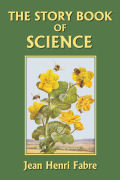
Fourth Grade: This year we will explore topics as they interest us as we read The Storybook of Science by Jean Henri Fabre. Topics range from ants to metals.

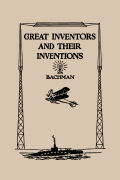
Milestones in Science by Thames & Kosmos will provide more information and experiments covering the accomplishments of over 140 scientists and civilizations. Great Inventors and Their Inventions by Frank Bachman will supplement.

Nature walks & studies will continue. The little details such as how we will keep a science notebook, whether we will profile the scientists we meet and learn about is still up in the air.



Photobucket


Sunday, October 19, 2008

Animals in 5th Grade

I've been thinking about what we'll be using next year in 4th grade for science lately and I've been tremendously blessed as all the options that I'm considering are in someway or another on their way to me. A generous fellow homeschooler has allowed me to preview her copy of The Elements: Ingredients of the Universe by Ellen McHenry, I purchased a used copy of God's Design for Chemistry: Properties of Atoms and Molecules for less than half the retail price and I have a few books coming from the library via interlibrary loan so I can have all the options side by side and make a decision about our 4th grade studies.

A friend recently asked me about studying biomes, which is what we'll be doing in 5th grade and as I was providing her links and resources it dawned on me that I didn't know what we were going to do! Before I put that thought off thinking it's too soon to develop a plan for 5th-8th studies, I realized that what we do in 5th and up will determine how I need to approach our studies in 4th and even now in 3rd. I don't want 5th grade to be *BAM*, now you're in 5th grade you need to start doing this and that. I want 4th grade to be the bridge between what we're doing now and what we will be doing. A perfect example is science vocabulary, if I expect Camille to write out 5-10 words and their definitions a week in 5th, I want to start her out with 2-3 words a week now in 3rd or 4th.

I looked at all the major curricula available on the homeschool market. I gave everything a chance and I could not find something that covered animals in a way that would be challenging to us that would hold our interest for an entire year and still allow us to read living books or provide enough hands-on, learning through doing type of approach. I decided that I'd make our own and build all the major different habitats in whatever ways we could. I found the book Habitats by Pamela Hickman at www.christianbook.com for $2.99 and decided that would be our real life application. The only thing left to do was to find a spine to use for the nonfiction information. I also decided that I needed to find a new spine for Danny since when Camille is in 5th, he'll be in 1st and we'll being doing our science together.

Sitting on my shelf from a sale purchase I made last year was Animals Alive! An Ecological Guide to Animal Activities by Dennis Holley. Dennis Holley is a biology teacher for grades 4-12 and has won two prestigious awards for his alternative curriculum used in Animals Alive! On the back of the book the story of a court case where a judge ruled that a girl would not be obligated to dissect a frog is presented with the challenge of whether or not the same lessons can be taught without killing animals.

The author warns that this book was not written to be fully integrated with any other subject area or any specific grade level.

Each chapter of the book addresses a major phylum of animal and presents information about :
-phylum's classification
-diversity and distribution (anatomical characteristics and habitats)
-collection of specimens
-maintenance of specimens
-health and safety issues concerning the specimens

-Teaching Strategies which include:

Observation: Observe and investigate the structure, movement, feeding, behavior/response and reproduction/growth of the specimen
a. Under behavior and response, students will explore geotaxis, thermotaxis, galvanotaxis, phototaxis, magnetotaxis, hydrotaxis, thigmotaxis, chemotaxis, rheotaxis

Ecology: investigating the habitat and surroundings of the animal and discover its place in nature.

Integration: Activities to integrate what the student has learned with writing, fine arts, social studies (history and geography), and societal/environmental issues. Math skills are also used when possible including constructing and analyzing data tables and graphes, measuring, calculating, and problem solving.

Chapter questions, activities and challenges are designed to be used in hands-on experiences in which students are actively involved in scientific investigation. When possible, they follow an inquiry-oriented approach designed to develop the following science process skills:

1.Observing
2. Measuring/Graphing: learn to make, record, and display quantitative information
3. Comparing/Contrasting: will learn to identify distinguishing characteristics among objects or events.
4. Sequencing: will learn to put events in order
5. Prediction: will learn how to propose possible outcomes
6. Experimentation: will learn how to design experiments to test their predictions
7. Analyzing/Reasoning: will learn how to explain the meaning and importance of data gathered or facts given.
8. Drawing Conclusions: will learn to make general statements about particulars.
9. Modeling: will learn to construct physical or mental models.
10. Communication: will develop skills for conveying information in oral, written, or pictorial form.
Holley says that "although some factual background is necessary, try to maximize thinking and minimize memorizing. Let process lead to content when possible. For example, allowing students to first work with live animal (process) and then discussing specific facts about the animal (content) will make the facts more understandable and relevant because students will have seen the animal live, up close, and in action."

A sample chapter, condensed.

Section One: Lower Invertebrates
2. Sponges

I. Classification is presented as Kingdom, Subkingdom, Phylum, and Classes
II. Diversity and distribution
III. General Phylum Characteristics
IV. Specific Class Characteristics
a. Class Calcarea
b. Class Sclerospongiae
c. Class Demonspongiae
d. Class Hexactinellia
V. Importance of Sponges
VI. Collection of Species
VII. Maintenance of Species
VIII. Health and Safety (Teachers, Students, Sponges)
IX. Teaching Activities
X. Habitat
a. Sponge Habitat
b. Sponge Habitat Comparisons
c. Land Sponges
d. Different Forms for Different Folks
e. Walk a Mile in My Shoes: Have students try to put themselves in the sponge's place by having them react orally or in written form to the following questions:
__1. Would you rather be a marine sponge or a freshwater sponge? Why? (Acceptable answer given.)
__2. Would you rather be a sponge with long spicules or one with short spicules? (Acceptable answer given.)
f. Muddy Water=No Sponges
g. Sponge Structure
h. Sponge Size Comparisons
i. Sponge- One or Many?
j. Green Sponges?
k. Sponge Regeneration
l. Sponges Come Together

XI. Feeding
a. Sponge Food
b. How Do Sponges Get Food?
c. Fabulous Filter
d. Is It Food Yet?
e. Attack of the Hungry Encrusters

XII. Reproduction and Development
a. Sponge Reproduction
b. Smoking Sponges
c. Gemmules- Why and Why Not
d. Observe Gemmules

XIII. Integration with other Subject Areas
a. Writing: report in which they explain which sample was the natural sponge and which was synthetic.
b. Fine Arts: Have students paint a picture of a sponge using a natural sponge, or, write a song or poem entitled "I'm Just a Lowly Sponge."
c. Social Studies:
__1. History: Why did it take so long to discover that sponges are animals? (Possible answers provided)
__2. Geography: Where are sponges harvested today? In the past?
d. Societal/Environmental Issues:
__1. Have students respond either orally or in written form to the question, How can studying reaggregation behavior of dissociated sponge cells be useful to humans? (Answer provided.)
__2. Why can sponges be thought of as biological apartment houses (or shopping malls)?
IXX. Release of Specimen.

We're not planning on maintaining a sponge specimen at home but this can be overcome by providing videos and I will be tapping into a few of our local resources like the University's aquarium for help. If we can collect a specimen, it will probably be successful due to the help of professionals. Hopefully I will gain a few professional advisors when I complete a Master Naturalist course next Spring through a local college.

Other likely specimens we will be exploring at home are: Planaria (after discussing it with Carolina Biological Supply), Earthworms, Land or Aquatic Snails, Spiders, Crayfish, Sowbugs or Pillbugs, Ants, Butterfly or Moth, Crickets, Mealworm Beetles, Goldfish or Guppies, Toad or Frog, Green Anole, Tortoise (already have one), Zebra Finches (not recommended in book but we already have them), Rodent (hamster, mice, gerbils). Um, the rodent one is the only one that will have to be carefully considered. Smile.

For supplies, of course we'll need habitats to house the critters for observation. It is my plan to only use animals that can be released back to the wild or in the rodent department, back to its original owner. A compound microscope is needed as well unless the activities involving one are skipped. There are so many components to this curriculum that I don't feel as if I've even scratched the surface of the treasures it holds!

I am ecstatic about using Animals Alive! for our 5th grade year, I think it will be an experience that the kids will remember for a long time. Check out Animals Alive! by Dennis Holley from your library or you can purchase a copy at Amazon or Barnes and Noble online.


Photobucket


Monday, October 13, 2008

4th Grade Science Thoughts

I've been bit by the "what to do next year" bug mainly because I want time to find the resources used instead of buying new as much as possible. The longer period of time I have to find used resources, the better.

Next year in 4th, I want to cover physical science and chemistry in one year. I loosely made our science sequence plan based on theory we may use Prentice Hall Science Explorer for 5th-8th. That plan is not set in stone because there may be different curricula that is more appealing for us at that time or I may just find that using a textbook is too stifling. Most importantly, I want to provide our children with a solid science education, especially since I feel it is likely Camille will have an interest in the science field.

In choosing science curricula, my main objective is to find something that will ignite a love of learning about whatever we're studying. Academic level is the second objective, then ease of use for me. Of course, the tone of the material is important and usually weeds out certain curricula- we do not wish to have propaganda either way that any creation theory (evolution, young earth, etc.) is an undisputed fact. I also tend to lean towards well put together curricula that is visually appealing, easy to use with a solid structure and sequence.

I chose God's Design for Life: The World of Plants by Debbie and Richard Lawrence for our 3rd grade botany (in addition to other products) because:

1. Welcoming narrative writing style that I feel comfortable with, I do not feel it talks for me but enables me to engage my child.

2. The scope of concepts is just the right depth. This is what made me decide against Apologia elementary science curriculum, the amount of terms and the explanations are a better fit from God's Design than Apologia's. I feel Apologia throws a bunch of concepts and terms at a child that is not ready for them to be absorbed, much less remembered in the long term. I don't feel it's worth providing such a deep level of study at the younger ages when it will be repeated again at a more appropriate level. It's not my goal to bog down my child in the elementary level but to ignite a love of learning and make science fun.

3. The text is organized for ease of use, providing a supply list at the beginning of the lesson, text to read, making observations and doing experiments, review questions and an opportunity to do deeper studies. God's Design provides an excellent springboard to add living books without it being too much. I also appreciate the experiments, biographies and historical information included in the text. There is no busywork that consists of word puzzles the like, which is something that irritates me to find in curricula.

4. I can use the lessons as quickly or as slowly as I prefer at whatever depth I deem necessary. We can cover a lesson a day or stretch it out over a couple of days. This flexibility is something unexpected that I have found in the God's Design curriculum although I highly appreciate it.
So for those reasons, I am considering using God's Design for next year's studies on physical science and chemistry. If this is the option I choose, we'd use:

God's Design for the Physical World
1. Heat and Energy
2. Machines and Motion

God's Design for Chemistry
1. Properties of Atoms and Molecules
2. Properties of Matter for Chemistry

I'd skip the Inventions and Technology this time in favor of Frank Bachman's Great Inventors and their Inventions (we already have). I love Exploring the History of Medicine by John Hudson Tiner so I would like to also include his physics and chemistry books to our studies.

Problem of Quantity
The problem I have created for myself by covering both physics and chemistry in one year is that if we used God's Design, is that we'd have a long study. There are 34-35 lessons per book and while it is doable to use 3 books in 36 weeks, 4 books would push our studies to 46 weeks if we did 3 lessons a week but is more doable at 4 times a week which would be 35 weeks. My concern with doing 4 lessons a week is that we'd be going through concepts very quickly and I feel this would negate the purpose of studying them. Not to mention it would involve 4 different experiments/projects a week, whew!

I prefer two to three lessons a week and we'd slow down as we needed- so two lessons is optimal and if we wanted, we could accomplish three lessons. For this reason, I'm shying away a little from using God's Design. It's not crucial to me to use something that would cause stress to our schedule when there are other alternatives. I'm also a bit concerned about the depth that the chemistry books go in and whether Camille would do well with the concepts. I can only see small glimpses of the book via the samples at Answersingenesis.org.

I have bought a used copy of one of the Chemistry books for God's Design, this will allow me to assess the situation better but I also have alternatives that I would be happy with as well.

For Physical Science- this caught my eye last year, Terrific Science's Teaching Physical Science Through Children's Literature. I love the concept of using children's literature (living books) to teach physical science and the lessons include integrated language arts focuses. Another plus is that there are only 20 lessons AND I could read John Hudson Tiner's Exploring The World of Physics. 20 lessons, 2 times a week would mean that physical science would only take 10 weeks of our year. If I were to use this, we could spend 10 weeks using the curriculum and then read Great Inventors and their Inventions as a main book before moving on to chemistry. Total time spent would be 15 weeks: 10 weeks on Teaching Physical Science and 5 weeks reading Great Inventors.

For Chemistry- Instead of using God's Design, Ellen McHenry's Elements: Ingredients of the Universe (Intro to Chemistry) has caught my eye. The very small sample shows how McHenry uses kitchen staples to signify elements,which I love! I want the idea that chemistry is all around us to be prevalent in whatever resources we use. There are only 7 chapters! Unfortunately, I cannot tell how long it would take to cover a chapter due to the lack of a sufficient sample. If I could keep Elements within 10 weeks, we'd have another 10 weeks to read another living book, The Secret of Everyday Things by Jean Henri Fabre or The Wonder Book of Chemistry by Jean Henri Fabre - which I would decide after our studies to determine which would best suit Camille at that time.

Although others have touted McHenry's Elements curriculum, I feel very leery since I cannot see a better sample. Another solution is to combine God's Design with the alternatives- either using God's Design Physical World OR Chemistry but not both. I will be teaching 4th grade and kindergarten next year so I am looking for a curriculum instead of creating my own, which I could do with the books we have. I'm a little intimidated by chemistry, it's a subject that can easily be delved into too deep.

This where I am currently at with this decision. I hope to read more about others' experiences with these products to better assess what would work best for us.

Photobucket


Thursday, September 18, 2008

Human Body Lessons


These are 10 weeks long using Head to Toe Science by Jim Wiese as the main spine and Christian Liberty Nature Reader Book 5 as a secondary spine. Instead we're using Human Body by Donald Silver and Patricia Wynne (Easy Make and Learn Projects).

We studied human anatomy in first grade but after revamping our science scope and sequence, I decided it should be done again but with a bit more depth. These lessons are intended for a 3rd-4th grade student, at least in my opinion.

Photobucket


If you're using Head to Toe Science by Jim Wiese, please feel free to use this in any way that may help your lessons. Any books can be substituted, these are books we own. I know that I neglected to include specific books on touch and smell during the five senses study but they are covered in the other books. I allotted two weeks to the senses and nervous system due to the reading load, it could be shortened.

To see the rest of our 3rd grade science studies, click here.


Friday, September 12, 2008

3rd Grade Science

This is what we've chosen to study this year, in chronological order.

I. Human Body, my lesson plans
- Head to Toe Science by Jim Wiese
-My Body by Teacher Created Resources
-Easy Make & Learn Projects Human Body by Donald M. Silver
-Christian Liberty Nature Reader Book 5

  1. The Brain- What It Is, What It Does by Dr. Ruth Dowling Bruun
  2. The Magic School Bus- Inside the Human Body by Joanna Cole
  3. Why I Sneeze, Shiver, Hiccup and Yawn by Melvin Berger
  4. Look at Your Eyes by Paul Showers
  5. Body Detectives: A Book About the Five Senses by Rita Golden Gelman
  6. Inside Your Outside! All About The Human Body by Tish Rabe (for Danny)
  7. Enjoy Your Cells by Dr. Fran Balkwill and Mic Rolph
  8. Cells and Systems by Holly Wallace
  9. Cells of Plants and Animals (microscope slides)
II. Germs
  1. The Magic School Bus kit: The World of Germs
  2. What are Germs? by Dr. Alvin Silverstein, Virginian Silverstein and Laura Silverstein Nunn
  3. Magic School Bus- Inside Ralphie: A Book about Germs
  4. Cell Wars by Dr. Fran Balkwill
  5. The Giant Germ (Magic School Bus Chapter Book) by Anne Capeci

III. Medicine
  1. The History of Medicine by John Tiner
  2. Spotlight on Science Famous Experiments

IV. Botany (cells, classification, scientists biographies included)
  1. God's Design for Life-The World of Plants by Debbie and Richard Lawrence
  2. Cells and Systems by Holly Wallace
  3. Cells of Plants and Animals (microscope slides)
We will learn about the human body down to DNA and cells then learn about germs and scientists who made a difference in the world of medicine before moving on to botany which will start with comparing animal and plant cells. I will update this resource list as it changes.

Living books will be added to our botany studies, nature studies will continue and I think it's going to be a fabulous year!


Thursday, September 11, 2008

Studying Botany - Finding Resources

Before re-inventing the wheel, I always search high and low for curriculum. For botany, this is what I have found so far (I may forget to list something):

Complete Curriculum Options

1. Apologia Elementary Science- Exploring Creation with Botany
2. God's Design for Life- The World of Plants
3. Lyrical Life Science Volume 1- Bacteria to Birds
4. Great Science Adventures- The World of Plants
5. Botany Adventure! Unit Study by Kym Wright

Activity Workbooks
1. Scienceworks Plants
2. Investigating Science - Plants Grades 1-3
3. Investigating Science Plants Grades 4-6
4. Teacher Created Resources- Plants

Experiment Based Books
1. Janice VanCleave Plants
2. Green Thumbs*
...and many others

*I already have 501 Science Experiments and Giant Science K-6 which provide many worksheet activities.
* Also notates books that we already own.

Nonfiction Spines
1. Eyewitness Plant*
2. Eyewitness Tree*
3. DK e-guide Plants by David Burnie
4. Life of Plants Series
5. Childcraft The Green Kingdom*
6. Usborne The World of Plants

I wish that Ellen Doris had already published her Botany book for the Real Kids/Real Science series, this would end my search for a nonfiction spine to use.

Living Books
1. Read and Find Out about Science titles that pertain to botany
2. Trees and Shrubs by Arabella Buckley and Plant Life in Field and Garden by Arabella Buckley
3. The Plant Hunters (unsure about reading level & content on this, waiting for library copy)
4. Books from botanical artist Anne Dowden- Look at a Flower; From Flower to Fruit (coming from library for preview)
5. Shanleya's Quest & Game (I love the looks of the game, I'm unsure about the book and it's not available through the library)
6. Seed-Babies by Margaret Morley* (printed out already from Google Books)
7. Collecting and Preserving Plants by MacFarlane

Stand-Alone Experiments & Kits
1. Little Labs-Plants
2. Leaf Identification Kit (this one is a little pricey but I want something similar) Cheaper version with less leaves.
3. or the Leaf and Seed Identification Games kit (which is the same price as the Leaf kit above)
4. Botanical Discoveries Kit
5. Tree Ring Kit

Games
1. The Garden Game
2. The Wild Seed Game
3. see Leaf and Seed Identification Games link under Kits above

My ideal course of study involves a nonfiction spine for informational purposes, living books for internalization, experiments to illustrate concepts or teach new skills, worksheets to reinforce concepts learned, biographies of scientists in the field we're studying and the overall experience to be educational, fun and worth our time.


Thursday, August 21, 2008

Working the Plan, My Way

It's great to have a plan! It's even better when you use the plan to work for you instead of against you. I have 12 weeks of invertebrate lessons that have been making me feel absolutely guilty for a while now, we read The Children of Summer by Margaret Anderson and then I decided it was time to just dive right in.

I'm not going to take 12 weeks though, but the lessons will be done before Sept. 15th. This week we've been doing a lesson a day. I told a friend about this and she said it was one of the beauties of homeschooling, being able to make a 12 week study happen in 12 days if we wish without rigid formality, just as a part of our daily lives. We can read science books at bedtime if we wish.

So far this week, we've talked about invertebrates and studies Sponges (week 2 of my plans), Cnidarians (week 3 of my plans) and today we'll read about Flatworms, Segmented Worms and Roundworms (week 4 of my plans).


On our day of sponges, we read Secrets of the Animal World: Sponges, Filters of the Sea and Sponges are Skeletons. We also skim read DK Animal and then Camille did her Sponges worksheet.

The next day we did Cnidarians and read, A Jellyfish is Not a Fish; Coral Reef Hideaway (about Sea Anenomes), Burgess' Seashore Book (chapters concerning jellyfish and sea anenomes) and then DK Animal. We skipped reading Secrets of the Animal World: Jellyfish, Animals with a Deadly Touch.

Today, we'll read Wiggling Worms at Work; Life in a Bucket of Soil (the chapters about worms) and What's Eating You? Parasites only what concerns roundworms. Or maybe we'll do it tomorrow instead. *Smile*


Tuesday, August 19, 2008

Excited about Science

I just received an order from Rainbow Resource yesterday that contained a few books and items I've picked for our science studies this year and I'm like a little kid excited to explore and learn!

I was a bit scared to break away from anyone's idea of what to study for science and when (mainly The Well-Trained Mind) and now I'm just so grateful that we did. We're currently studying invertebrates with the lessons I created and having such a good time, even without the experiments I had wanted to do. The Children of Summer by Margaret Anderson was such a great read for us, we were entranced by discoveries and lessons learned by the children and their Pére.

I have been too busy, stressed and what not to focus on our invertebrate study the way I had originally intended but I have a renewed focus and we will finish it by our 3rd grade/PreK start date of Sept. 15th. Yesterday we read, Sponges Are Skeletons by Esbensen (Let's Read and Find Out about Science, Level 2) and Secrets of the Animal World: Sponges, Filters of the Sea and really enjoyed ourselves. Today we'll do the worksheets I have for sponges and start reading about Cnidarians.

For 3rd grade, I decided a year devoted to Human Body, Cells and Plants would be a great idea and seeing the books come in, it feels like a cohesive plan! I was a little worried at first whether it would be as cohesive as I imagined but I'm bubbling over with excitement that it actually is!

We'll start the year with Head to Toe Science by Jim Wiese (not Weiss, the storyteller) and have 10 weeks of learning about the Human Body and then I have to figure out the next step with wonderful resources I've found for learning about parasites, germs, cells, DNA and of course, John Tiner's The History of Medicine! By Spring, we'll transition into Botany and truly be able to connect the differences and similarities between plants and animals.

The year's flow will go like this:

Human Body general studies for 10 weeks
-using Head to Toe Science, Christian Liberty Nature Reader 5, My Body (by TCR) and other various subject specific books

Cells, Parasites, Germs and Viruses
-Using Cells and Processes, What are Germs?, What's Eating You? A book about parasites, Magic School Bus Kit on Germs, Microscope slides on Animal and Plant cells to use with Pocket Microscope (100x) power and other various subject specific books.

The History of Medicine with corresponding experiments that I need to still find. Spotlight on Science's Famous Experiments has a few (Sir Alexander Fleming, Edward Jenner, Gregor Mendel, Anton Van Leeuwenhoek, Robert Hooke, and Joseph Priestly)

Botany
I have many resources that I need to coordinate yet but most will be living books like Seed-Babies by Margaret Morley.

The kids are excited, even Danny who grabbed our Magic School Bus kit on Germs yesterday and excited said, "My school bus! My game!" They both wanted me to take our new stethoscope out of it's plastic wrapping so they could play with it. I told them not yet, we're still learning about invertebrates. I know Danny is going to be happy making his own body this year as Camille and I revisit Human Body studies.

I know I sound like a science geek and I don't care. We're having fun and reading wonderful books!


Wednesday, August 13, 2008

It's wild!


I was glad to find this Rain Forest mural bulletin board set, the kids love it in their animal bedroom! Danny is seeing it for the first time. Camille helped me put it up so she learned all about the different layers of a rain forest informally. Now they can stare at it and memorize it. :) I need other biomes...
Here's the Rainforest set for $5.99 - http://www.teachingstuff.com/browse.cfm/4,10978.html
There are other biome bulletin sets at that website!


Sunday, May 4, 2008

Invertebrates Lessons


Spines:
1. Animal: The Definitive Visual Guide to the World's Wildlife

2. Any non-fiction book that focuses on invertebrates, for this we have two books:

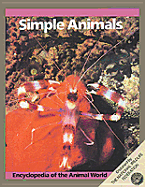
Encyclopedia of the Animal World: Simple Animals 0-8160-1968-1
Encyclopedia of the Animal World: Insects and Spiders 0-8160-1967-3
both are out of print


Living Books

The Burgess Seashore Book for Children (Dover Storybooks for Children)
Insect Folk by Margaret Morley (OOP, free text-linked to Gutenberg)
Children of Summer: Henri Fabre's Insects by Margaret Anderson (OOP)
The Cheerful Cricket and Others by Jeanette Marks (OOP, free text-linked to Gutenberg)
All other books mentioned are the books we own, they are not recommendations for the best book on the topic.

Activity Books:

Giant Science Resource Book: Grades 1-6
The 100+ Series Life Science Grades 5-8
All other books mentioned are the books we own, they are not recommendations for the best book on the topic.

Projects:
Consider what living experiments or dissections may be appropriate during the study. Order ahead to ensure timely delivery.

From HomeScienceTools.com:
Pocket Microscope 100x
Elementary Slide Set

From Carolina Biological Supply:
exclusively from Carolina
Life in a Rotting Log Kit, $34.25
Young Scientist's Starfish Dissection Kit, $6.95

Free helps for projects:
Build A Wormery
Build Your Own Ant Farm
We also intend to go beachcombing and explore what we're learning in our environment.

~~~~~~~~~~~~~~~~~~~~~~~~~~~~~~~~~~~~~~~~~~~~~~~~~~~~~

Week 1 Introduction to Invertebrates
Teaching Focus
A. Explain differences between vertebrates/invertebrates
Group of animals that have no backbone, jaws, or bony skeleton
1. Hydrostatic skeleton, hard plates, spicule skeleton, shells
Hydrostatic: water-filled balloon
B. Overview of invertebrate classification
C. Define bilateral and radial symmetry
D. Metamorphosis
E. Herbivores and Carnivores
  1. In water invertebrates filter feed
  2. On land, invertebrates forage for food

Books
DK Animal, pg. 524-527
Simple Animals by Stidworthy, pg. 6-9
Benny's Animals and How He Sorted Them by Selsam (Independent)
Bugs by Nancy Winslow Parker, pg. 38

Experiments/Activities
Giant Science: Ocean Invertebrates, Sorting Cards, Land Invertebrates
The 100+ Series Life Science (Grades 5-8) by Daryl Vriesenga
- pg. 43, Backbone or No Backbone
- pg. 76 Metamorphosis
- pg. 36 Symmetrical Critters


United Streaming
Animals Around Us: Invertebrates, What Are They?
Animals Without Backbones: The Invertebrate Story


Week 2 Sponges (Porifera)
Teaching Focus
A. Immobile (sessile), attached to solid surfaces
B. Filter feeds & excretes
C. Most are marine, few are freshwater
D. Illustrate the anatomy of a sponge

Experiments/Projects/Activities
EnchantedLearning.com Sponge Anatomy
or
The 100+ Series Life Science (Grades 5-8) by Daryl Vriesenga
- pg. 79 Label the Sponge


Books
Secrets of the Animal World: Sponges, Filters of the Sea
Simple Animals pg. 14-15
DK Animal pg 528

United Streaming
Porifera

Suggested approach for the week:
Day 1- Do overview of DK Animal, Read Simple Animals
Day 2- Read Secrets of the Animal World: Sponges, work on worksheet
Day 3- Finish Day 2 focus and watch Porifera


Week 3 Cnidarians (Sea Anemones, Corals, Jellyfish)
Teaching Focus
A. Symmetrical body
B. Tentacles around mouth, stinging cells (cnidocytes)
C. Most marine, few freshwater
D. Polyps, Medusae (venn diagram comparisons)
E. Carnivores

Experiment/Project:
Giant Science; Cnidarians

Books
Secrets of the Animal World: Jellyfish, Animals with a Deadly Touch
Simple Animals pg. 16-23
DK Animal pg 529-532
A Jellyfish is not a Fish by Waters
Coral Reef Hideaway by Boyle
Burgess Seashore Book:
The Queer Jelly, pg. 123, R.F. sees Queer Garden, pg. 129

United Streaming
Animal Life in a Tidepool
Animals Around Us: Invertebrates: What are they?

Suggested approach for the week:
Day 1- Do overview of DK Animal, Read Simple Animals, do worksheets
Day 2- Read half of Secrets of the Animal World: Jellyfish, A Jellyfish is not a Fish (Ind.), BSB: Queer Jelly
Day 3-
Read 2nd half of Secrets of the Animal World: Jellyfish, Coral Reef Hideaway (Ind.), BSB: Queer Garden
Day 4- United Streaming


Week 4
Flatworms (Platyhelminthes)

Teaching Focus
A. Bilateral symmetry

Segmented Worms (Annelids)
Teaching Focus
A. Divided into a series of linked by partly independent sections,
each section has independent organs
B. Burrowers

Roundworms (Nematodes)
Teaching Focus
A. Free living or parasitic

Experiment/Project:
Comparison worksheet: Sponge, Cnidarian, Flatworm, Roundworm
Segmented Worms worksheet

Books
What's Eating You? Parasites
Simple Animals pg. 24-29, 34-35
DK Animal pg 533-535
Life in a Bucket of Soil pg 23-35: Earthworms and Roundworms
Wiggling Worms at Work

United Streaming
Animals without Backbones: The Invertebrate Story
Animals Around Us: Invertebrates: What are they?


Week 5-6 Mollusks
Teaching Focus
A. Includes gastropods, bivalves, cephalopods, chitons and less familar mollusks.
  1. Oysters, clams, mussels, snails, slugs, octopus, squid
B. All mollusks have one or all of the following:
  1. Horny, toothed ribbon in mouth (radula)
  2. Calcium-carbonate shell
  3. Mantle or mantle cavity with gill
  4. Live on land, water or parasite
C. Most consist of 3 parts: body, head and muscular foot

Experiment/Project:
Giant Science: What is a Snail?, Mollusks (w/one, two, no) shell(s)
100+ Series Life Science: pg. 77, Clams

Books
Simple Animals pg. 60-75
DK Animal pg 538-544
Life in a Bucket of Soil: Snails & Slugs pg. 36
Biography of an Octopus by Hopf
Burgess Seashore Book: Collars of Sand, pg. 92, Clams 31,37, 170-177, Squid pgs. 158-164

United Streaming
Oceans Alive: Mollusks
Science of the Sea: Marine Marvels


Week 7 Echinoderms
Teaching Focus
A. Marine invertebrates: starfish, brittlestars, sea urchins, sea cucumbers
B. Typically spiny and divided into 5 equal parts arranged symmetrically around a central point
C. Skeleton made of calcium-carbonate plates
D. Unique water-vascular system
E. Mobile, bottom-dwelling

Experiment/Project:
Giant Science: Echinoderms
Glencoe: How do Echinoderms Move? worksheet
Dissect Starfish

Books
One Small Place by the Sea by Brenner (Ind.)
Simple Animals pg. 76-85
DK Animal pg 529-532
Starfish by Edith Thatcher Hurd (Ind.)
Burgess Seashore Book: 72-78, 99, 135

United Streaming
Echinoderms
Animals Around Us: Invertebrates: What Are They?


Week 8-12 Arthropods
Teaching Focus
A. Largest phylum
B. Exoskeleton covering a segmented body w/jointed legs in pairs
C. Only invertebrates capable of powered flight
D. Essential to world's ecosystems

Weeks 8-10
Teaching Focus
I. Mandibulates
The Mandibulata distinguishes those arthropods, such as insects and crustaceans, that posses biting jaws (mandibles), from the chelicerates which developed pincers instead (e.g. spiders). Specifically, the mandibles of the mandibulates are derived from the legs of the third or fourth segment. In addition, all mandibulates have groups of eight cells in the retinula of the compound eye, if one exists. They may be uniramous or biramous (one or two pairs of legs per segment), one or two pairs of antennae, and two or three main body segments.

A. Hexapods-
a consolidated thorax with three pairs of legs
1. Insects
a. 3 pairs of legs
b. wings, powered flight
c. ecosystems are highly dependent
d. segmented body: head, thorax, abdomen
e. simple eyes (ocelli) and compound eyes
f. Life cycles: Ametabolous development, Incomplete Metamorphosis, Complete Metamorphosis
Bristletails
Silverfish
Mayflies

Damselflies and Dragonflies
Bugs by Nancy Winslow Parker
Crickets & Grasshoppers
Bugs by Nancy Winslow Parker
Stoneflies
Rock Crawlers
Stick and Leaf Insects
Earwigs
Mantids
Cockroaches
Bugs by Nancy Winslow Parker
Termites
Bugs by Nancy Winslow Parker
Web-Spinners
Angel Insects
Barklice and Booklice
Parasitic Lice
Bugs by Nancy Winslow Parker
Bugs
Thrips
Dobsonflies and Alderflies
Snakeflies
Antlions, Lacewings and Relatives
Beetles
I like Beetles by Conklin
Stresipterans
Scorpionflies
Fleas
Bugs by Nancy Winslow Parker
Flies & Mosquitoes
Bugs by Nancy Winslow Parker
Caddisflies
Moths and Butterflies
Bugs by Nancy Winslow Parker
Know it all Butterflies
How to Hide a Butterfly by Heller
Bees, Wasps, Ants, and Sawflies
Bugs by Nancy Winslow Parker
Honeybees
Honey in a Hive
How Bees Make Honey
The World of Ants
Ant Cities
Amazing World of Ants
B. Myriapods
Centipedes and Millipedes

Books
Insect Folk by Margaret Morley (190 pgs.)
- covers most of the insects above

Children of Summer by M. Anderson (92 pgs.)
- fictional account of Jean Henri Fabre's children

The Cheerful Cricket and Others by Jeannette Marks (75 pgs.)
- short, informative reads on variety of insects (Ind)

Encyclopedia of Animals: Insects & Spiders
An Insect's Body by Joanna Cole
Life in a Bucket of Soil- covers Bristletails, Mites, Bees, Ants, Centipedes, Woodlice

Experiments/Projects
100+ Life Science:
- pg. 62 Classes or arthropods
- pg. 72-73 Grasshopper
- pg. 74-75 Moths and Butterflies
Giant Science: Various

United Streaming
Junior Zoologist: Insects
The Incredible World of Insects
Exploring the Diversity of Life: Insect Diversity
Magic School Bus Gets Ants in Its Pants, The
Butterflies and Bees
Bees and How They Live
Magic School Bus in a Beehive, The


Week 11
C. Crustaceans

Branchiopods
Copepods & Barnacles
Malacostracans
Shrimp, Crayfish and Prawn
Crabs
Lobsters
Woodlice, Beach Hoppers

Books
Burgess Seashore Book for Children pgs- 17, 25, 48-65, 152-157, 190-196
Simple Animals pg. 36-59
DK Animal
Life a Bucket of Soil, Woodlice

United Streaming
Seahouse: Crabs, Lobsters, and Shrimp
Animals without Backbones: The Invertebrate Story
Ocean Habitats: Shoreline and Reef


Week 12
II. Chelicerates

A. Sea-Spiders
Burgess Seashore Book: pg. 135
B. Horseshoe Crabs
Burgess Seashore Book 105-110
Horseshoe Crab by R. McClung
C. Arachnids
Scorpions
Ticks and Mites

Bugs by Nancy Winslow Parker

Spiders & Tarantulas

Secrets of the Animal World: Spiders, The Great Spinners
Wolfie by Janet Chenery

Books
Insects & Spiders
DK Animal
Life a Bucket of Soil, Spiders

United Streaming
The Incredible World of Spiders
Magic School Bus Spins a Web, The
The Life of a Forest: A Forest Grows Old


Just Moving Along, Singing my song...

Busy, busy, busy!

We are now into the month before moving and I am working on multiple things at once. I'm finalizing our invertebrates study for science which will occur June-August this year. Although I'm tickled to have a personalized science approach, it does make it more labor intensive for me. I think the fruits will be worth it though and we'll actually do the lessons because the approach is personalized. This month we're finishing up our study of birds which involves a lot of reading and nature study.

We are in the middle of watching Winged Migration and other online videos at United Streaming about birds, their habitats and behaviors. Friday, dh and I whisked the kids away from the house to go to an animal park where we observed flamingos, ostriches, and other birds with new eyes. Being able to SEE a turaco and actually observe how its front two toes can reverse themselves is completely different from just reading about it. I'll share photos in the next post.

History was sort of light this past week, I have pictures of a diorama we built.

I'm distracted. I'm overwhelmed but I'm just trucking along trying to get everything done. Laundry, organizing books to pack, etc. We have purged a lot of items from our house and there is still more to do. I become paralyzed as I think about sorting through the closets in our home, how I want items packed for easy unpacking or for storage if the case need be. I'm desperately trying to separate the books we'll need for our lessons immediately and I want to finish TOG Year 2, Unit 3 before we move so I can just have Unit 4 ready to go after our break.

Lots of organizing, thinking, and streamlining happening around here.


Thursday, May 1, 2008

Our Bird Poster


We used DK Animal for the bird classification, I created the little rounded boxes of information for each order. These are able to be flipped up to reveal more information underneath, which we haven't done yet. In the blue on the left bottom is comparisons of different feet and beaks and their uses. We're only halfway done with our bird study, but it has been a lot of fun. We may be making our own posters from now on, it was so educational to do it this way.


Sunday, April 13, 2008

Our K-8 Science

Our scope and sequence changes as it needs to, nothing is set in stone.

Photobucket


Science Scope by Kathryn Stout- The concepts and skills taught in grades K-12 science and health classes are arranged by topic and grade for an easy-to-use approach to teach students of all ages—including multi-levelly. Teaching tips include how to teach the scientific process and strategies in a manner that encourages children to think critically and get the most out of their explorations and experiences. By using this guide as a reference of what and how to teach, content can be covered with any resources that the student finds appealing. The teacher no longer needs to feel bound to one specific curriculum for fear of leaving educational gaps. A checklist allows convenient record keeping. Students in grades 6-12 can use this book as a working outline to find information on their own.


Other core resources: Along with nature study & journaling, subscriptions to children's science magazines (Zoobooks and Ranger Rick for right now).

Trivium Academy Science K-12


Our year is organized into four quarters, the quantity of resources may reflect that our studies change by quarter. Studies are done year-round from 40-45 weeks. Resources may change as the need changes. It is impossible to list all the resources we might use from the library or other sources throughout each year, this is an overview.

Kindergarten: We will explore the world with Galloping the Globe and use The Animal Atlas to help visually identify animals within their biomes. Culture, world geography (including introducing landforms), literature and science will be the year’s focus.

We will also start reading Mother West Wind stories or The Burgess Animal Book for Children (depending on interest) as our living science book focus for kindergarten and participate in regular nature walks and studies.


First Grade: Our study of animals will deepen and become more organized with the help of God’s Design for Life: The Animal Kingdom and our carefully selected animal encyclopedia, The Encyclopedia of Animals: A Complete Visual Guide by George McKay to help us discover and learn about the animals of our world.


Danny’s first grade year will be Camille’s fifth grade year so he will have the opportunity to see many animals live and up close as we will be observing many live animals during the course of the year in effort to learn from them.

We will also be reading from our vast home library of animal books as we go through the God’s Design lessons.

For our living science book, we will read either Burgess Animal Book for Children or Burgess Bird Book for Children, as well as James Herriott’s Treasury for Children and our regular nature walks and studies.


Second Grade: Studies will continue to be organized by God’s Design for Life series by using The Human Body volume, which will be supplemented with Head to Toe Science by Jim Wiese where appropriate with other science books to expand on the topics we cover.

We will use the Magic School Bus World of Germs kit to explore more about germs, bacteria and viruses.

John Hudson Tiner’s Exploring the History of Medicine will be read to explore scientists biographies for scientific literacy with DK Eyewitness Medicine. We will use Spotlight in Science’s Famous Experiments kit alongside the History of Medicine, aligning them when possible.

From our study on medicine will start our Botany studies using God’s Design for Life: The World of Plants and Shanleya’s Quest by Thomas Elpel. We have many living science books for botany including Margaret Morley’s Seed-Babies and Gregor Mendel: The Friar Who Grew Peas.


We will also be exploring botany science topics with these 17 creative experiments with three kinds of plants. You'll find out about circadian movements, root structure, phototropism, photosynthesis, growing methods, and more. This kit is ideal for science fairs! It includes seeds (mustard, cactus, and sensitive plants), biodegradable cups, germination discs, water retention crystals, a study guide, and other items.

Also nature walks and studies will continue.


Third Grade: We will use the whole God’s Design for the Heavens and Earth series during the year supplementing with The Earth Science Book by Dinah Zike, The Geography Book by Caroline Arnold and The Space Book by Marc McCutcheon which was used in Camille’s earth science year.

We will read from our home library of wonderful books about rocks and minerals, weather and other earth science topics. Our living science book will be The Fairy-Land of Science by Arabella Buckley.

We will reuse resources that we used for Camille’s year of earth science, including Slinky Science’s Rocks and Minerals kit as well as the Awesome Forces of God’s Creations DVDs.

Nature walks & studies will continue.


Fourth Grade: This year we will explore topics as they interest us as we read The Storybook of Science by Jean Henri Fabre. Topics range from ants to metals.

Milestones in Science by Thames & Kosmos will provide more information concerning the accomplishments of over 140 scientists and civilizations. Great Inventors and Their Inventions by Frank Bachman will supplement. Nature walks & studies will continue.


At this stage in our studies, I prefer to have a textbook to refer to, I have chosen the McDougal/Littel Life Science, Earth Science and Physical Science textbooks.

Fifth Grade: Animals Alive! by Dennis Holley will lead us through inquiry and observational studies of animals by phylum for an in-depth study . Ecology for Every Kid by Janice VanCleave will be used for ecology as well as a large range of children’s science books to explore the topics further.

This year will exciting yet extensive as we keep and observe live animals for a short time to learn more.

We might get Exploring Ecology by Patricia Warren for our nature studies.

Nature walks & studies will continue.


Sixth Grade: We will study the human body in more depth with Human Biology Activities Kit by John Roland with a nonfiction resource (yet to be chosen) such as How the Body Works, or another Human Body encyclopedia in addition to a life science textbook.

At this stage we will use a compound microscope, National Optical 131 compound microscope. (selection may change).

For our botany studies this year, we will use Botany in a Day by Thomas Elpel with Plant Identification and Terminology and Wisconsin Fast Plants experiments. We will use our life science textbook and the Essential Atlas of Botany to guide our academic learning.


Coursework may be modified. Nature studies will continue. Scientists biographies will be chosen for independent reading.


Seventh Grade: Project Earth Science titles: Geology, Oceanography, Astronomy and Meteorology will lead our studies for earth science and astronomy.

Our academic studies will be supplemented with an earth science textbook and a chosen encyclopedia such as How the Earth Works or How the Universe Works. This may be modified.

The order of study will be Meteorology, Geology, Oceanography and finally Astronomy to finish the year.

Nature studies will continue.


Eighth grade: This year is being reserved as a year to either accomplish high school chemistry or high school biology depending on the math level that is obtained. Scientfic literacy will be an important element. General Science coursework in physical science and chemistry may also be explored. Coursework is to be determined as we near this stage, dependent on skill level, interest and dedication. Possible coursework is as follows:

Option 1: General science coursework with scientific literacy, preparing for high school work.

9th: HS Biology
10th: HS Chemistry
11th: HS Physics
12th: Optional AP coursework or study in field of interest

Option 2: High school biology or chemistry with scientific literacy.

9th: Chemistry/Biology (depending on 8th grade choice)
10th: Physics
11th: AP Biology
12th: Optional coursework depending on interest.

Option 3: Scientific literacy with main focus on mathematical learning.