


Here's our reading list for 4th:
Independents
The Mouse and The Motorcycle by B. Cleary
Sarah, Plain and Tall by MacLachlan
The Year of the Panda by Schlein
The Hundred Dresses by Estes
Mr. Popper's Penguins
Pinocchio
Flat Stanley
Homer Price
From the Mixed-up Files of Mrs. Basil D...
Read Alouds
Narnia (unsure how this will be received so we'll do 1 and see how it goes)
The Penderwicks
The Little Princess
The Railway Children
Tom Sawyer
King of the Wind
Pollyanna
Most of the Independent titles have online guides, others will be from Veritas Press or Progeny Press.


Showing posts with label 4th grade. Show all posts
Showing posts with label 4th grade. Show all posts
Thursday, January 15, 2009
4th Grade Reading

A Modified 4th Grade Plan
Camille's 4th Grade Year
Math: Math-U-See Delta/Epsilon (3x/wk) and Math on the Level (1-2x/wk)
Latin: Latina Christiana I with DVDs
Language Arts: after finishing Writing Tales 1, Intermediate Language Lessons by Margot Davidson
Spelling: Simply Spelling by Laurie Hicks
Science: God's Design for the Physical World set
Geography: Discovering the World of Georgraphy (4 workbooks), Leap Frog Smart Explorer Globe and other games
Independent Reading with Study Guides from Progeny, Veritas or online.
The Mouse and The Motorcycle by B. Cleary
Sarah, Plain and Tall by MacLachlan
The Year of the Panda by Schlein
The Hundred Dresses by Estes
Mr. Popper's Penguins
Pinocchio
Flat Stanley
Homer Price
From the Mixed Up Files of Mrs. Basil E. Frankweiler
Read Alouds (One per month)
Narnia (unsure how this will be received so we'll do 1 and see how it goes)
The Penderwicks
The Little Princess
The Railway Children
Tom Sawyer
King of the Wind
Pollyanna
I will not be using TOG Redesigned Year 4 next year, partly because of the subject matter but also because of the cost and hassle of getting the books either buying or from the library. I need a more manageable overall syllabus that is more open and go and to streamline as much as possible. Poetry memorization will be done through Intermediate Language Lessons instead of The Harp and Laurel Wreath just for efficiency.
Tuesday, December 16, 2008
Thoughts about K/4th grade
Curricula
Math- Math U See Gamma/Delta with Math on the Level (30 min)
Spelling- Simply Spelling (15 min)
LA- ILL with Writing Aids' support (up to 30 min)
Latin- Latina Christiana I with DVDs (up to 30 min)
History- TOG Year 4 with Evaluations and MapAids (up to 30 min daily)
Science- General Science (Inventions, Milestones of Science, etc.) (up to 30 min daily)
Music- instrument lessons (piano) (1 lesson a week and 15 min of practice daily)
Poetry Memorization- cutting down to one poem a month (5-10 min daily)
Time spent total approx. 2-3 hrs.
If ds4 will be at home for K:
ABeCeDarian (only thing I need to buy)
Math on the Level
Handwriting
Galloping the Globe
To be limited to 1-1.5 hour of work each day
So homeschooling can be done with both of them in about 4 hours a day, dd8 will have independent work to do while I work with ds4 (they will be a year older next year) and she can do art, informal logic and other things as she pleases or in her free time. It would be nice if I could teach them simultaneously but I'm not going to hold my breath on that.
I'll probably have to do phonics with ds then do Latin with dd, giving him a play break.
Math together, possibly if not I can do math with ds while dd does her independent reading or piano practice.
Handwriting with ds while dd completes her ILL lesson
Galloping the Globe as a family type activity after dd's history and science work has been completed.
Somehow it seems more manageable but I am just thinking aloud as I type. If I did put ds in public school for K, I would have more uninterrupted time for my college work. With him home, I don't know how I'd get that time. If he did go to school, we could still do Galloping the Globe as a family, with bedtime readings.
I think his maturity level at the end of the year, in June or July will be a major determining factor. Let's be honest, it's also dependent on how I can juggle college, homeschooling and part-time work with just dd8 plus maintaining consistent discipline.
I know I need to do last week's report, I'm only online anymore in the morning. I'll get to it this week, plus this week's report.
Sunday, October 26, 2008
Our 4th Grade Science
After much deliberation and prayer, as well as bugging other homeschoolers, we have finally devised a plan for 4th grade science that we are excited about.
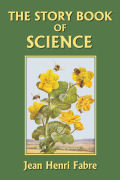 Fourth Grade: This year we will explore topics as they interest us as we read The Storybook of Science by Jean Henri Fabre. Topics range from ants to metals.
Milestones in Science by Thames & Kosmos will provide more information and experiments covering the accomplishments of over 140 scientists and civilizations. Great Inventors and Their Inventions by Frank Bachman will supplement.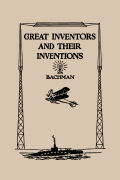 Nature walks & studies will continue. The little details such as how we will keep a science notebook, whether we will profile the scientists we meet and learn about is still up in the air.
Monday, October 13, 2008
4th Grade Science Thoughts
I've been bit by the "what to do next year" bug mainly because I want time to find the resources used instead of buying new as much as possible. The longer period of time I have to find used resources, the better.
Next year in 4th, I want to cover physical science and chemistry in one year. I loosely made our science sequence plan based on theory we may use Prentice Hall Science Explorer for 5th-8th. That plan is not set in stone because there may be different curricula that is more appealing for us at that time or I may just find that using a textbook is too stifling. Most importantly, I want to provide our children with a solid science education, especially since I feel it is likely Camille will have an interest in the science field.
In choosing science curricula, my main objective is to find something that will ignite a love of learning about whatever we're studying. Academic level is the second objective, then ease of use for me. Of course, the tone of the material is important and usually weeds out certain curricula- we do not wish to have propaganda either way that any creation theory (evolution, young earth, etc.) is an undisputed fact. I also tend to lean towards well put together curricula that is visually appealing, easy to use with a solid structure and sequence.
I chose God's Design for Life: The World of Plants by Debbie and Richard Lawrence for our 3rd grade botany (in addition to other products) because:
1. Welcoming narrative writing style that I feel comfortable with, I do not feel it talks for me but enables me to engage my child.So for those reasons, I am considering using God's Design for next year's studies on physical science and chemistry. If this is the option I choose, we'd use:
2. The scope of concepts is just the right depth. This is what made me decide against Apologia elementary science curriculum, the amount of terms and the explanations are a better fit from God's Design than Apologia's. I feel Apologia throws a bunch of concepts and terms at a child that is not ready for them to be absorbed, much less remembered in the long term. I don't feel it's worth providing such a deep level of study at the younger ages when it will be repeated again at a more appropriate level. It's not my goal to bog down my child in the elementary level but to ignite a love of learning and make science fun.
3. The text is organized for ease of use, providing a supply list at the beginning of the lesson, text to read, making observations and doing experiments, review questions and an opportunity to do deeper studies. God's Design provides an excellent springboard to add living books without it being too much. I also appreciate the experiments, biographies and historical information included in the text. There is no busywork that consists of word puzzles the like, which is something that irritates me to find in curricula.
4. I can use the lessons as quickly or as slowly as I prefer at whatever depth I deem necessary. We can cover a lesson a day or stretch it out over a couple of days. This flexibility is something unexpected that I have found in the God's Design curriculum although I highly appreciate it.
God's Design for the Physical World
1. Heat and Energy
2. Machines and Motion
God's Design for Chemistry
1. Properties of Atoms and Molecules
2. Properties of Matter for Chemistry
I'd skip the Inventions and Technology this time in favor of Frank Bachman's Great Inventors and their Inventions (we already have). I love Exploring the History of Medicine by John Hudson Tiner so I would like to also include his physics and chemistry books to our studies.
Problem of Quantity
The problem I have created for myself by covering both physics and chemistry in one year is that if we used God's Design, is that we'd have a long study. There are 34-35 lessons per book and while it is doable to use 3 books in 36 weeks, 4 books would push our studies to 46 weeks if we did 3 lessons a week but is more doable at 4 times a week which would be 35 weeks. My concern with doing 4 lessons a week is that we'd be going through concepts very quickly and I feel this would negate the purpose of studying them. Not to mention it would involve 4 different experiments/projects a week, whew!
I prefer two to three lessons a week and we'd slow down as we needed- so two lessons is optimal and if we wanted, we could accomplish three lessons. For this reason, I'm shying away a little from using God's Design. It's not crucial to me to use something that would cause stress to our schedule when there are other alternatives. I'm also a bit concerned about the depth that the chemistry books go in and whether Camille would do well with the concepts. I can only see small glimpses of the book via the samples at Answersingenesis.org.
I have bought a used copy of one of the Chemistry books for God's Design, this will allow me to assess the situation better but I also have alternatives that I would be happy with as well.
For Physical Science- this caught my eye last year, Terrific Science's Teaching Physical Science Through Children's Literature. I love the concept of using children's literature (living books) to teach physical science and the lessons include integrated language arts focuses. Another plus is that there are only 20 lessons AND I could read John Hudson Tiner's Exploring The World of Physics. 20 lessons, 2 times a week would mean that physical science would only take 10 weeks of our year. If I were to use this, we could spend 10 weeks using the curriculum and then read Great Inventors and their Inventions as a main book before moving on to chemistry. Total time spent would be 15 weeks: 10 weeks on Teaching Physical Science and 5 weeks reading Great Inventors.
For Chemistry- Instead of using God's Design, Ellen McHenry's Elements: Ingredients of the Universe (Intro to Chemistry) has caught my eye. The very small sample shows how McHenry uses kitchen staples to signify elements,which I love! I want the idea that chemistry is all around us to be prevalent in whatever resources we use. There are only 7 chapters! Unfortunately, I cannot tell how long it would take to cover a chapter due to the lack of a sufficient sample. If I could keep Elements within 10 weeks, we'd have another 10 weeks to read another living book, The Secret of Everyday Things by Jean Henri Fabre or The Wonder Book of Chemistry by Jean Henri Fabre - which I would decide after our studies to determine which would best suit Camille at that time.
Although others have touted McHenry's Elements curriculum, I feel very leery since I cannot see a better sample. Another solution is to combine God's Design with the alternatives- either using God's Design Physical World OR Chemistry but not both. I will be teaching 4th grade and kindergarten next year so I am looking for a curriculum instead of creating my own, which I could do with the books we have. I'm a little intimidated by chemistry, it's a subject that can easily be delved into too deep.
This where I am currently at with this decision. I hope to read more about others' experiences with these products to better assess what would work best for us.
Subscribe to:
Comments (Atom)


 Posts
Posts