Photobucket Photobucket Photobucket Photobucket Photobucket Photobucket


Friday, April 11, 2008

The Things They Say...

Danny ran to get a dandelion and brought it to Camille.
"Thank you Danny, I love wish flowers!" Camille said.

The kids are brushing their teeth in the bathroom.
"MOM!!! Danny's washing the bathroom counter with my underwear and toothpaste!"

Ah, the joys of being at home.


Thursday, April 10, 2008

Learning Room Revamp

View from the sofa


Nevermind that we're blocking our unused front door...


Just another view that shows the kids' foldable work table (height adjustable too) and the sofa. Oh, there's a glider in the room too. It's hard to photograph this room!


I suspect every homeschooler's hutch for china looks like this! Lol. I wanted a place where we could SEE our games and extras but Danny wouldn't pull them down and they wouldn't take up valuable shelf space.

Our newly organized and revamped room. I removed our computer from the room which has been a great decision. Too distracting and accessible. :) My desk is now next to the hutch pictured with a cork board above it. My little office.


3rd Quarter

Here's our 3rd Quarter of 2nd Grade:

***We are waiting until after our move to start Prima Latina, it is not worth starting something at this point when life is so hectic. We will wait until after we move and start Prima Latina as a part of 3rd grade in September.

Week 1 (Apr. 14-18)

Bible: Lesson 22, Days 1-5
Math: Lessons 120-124
Poetry: Review all, Rain by Robert Louis Stevenson
French: Review Unit 1, start Unit 2
Science: Nature Study and Bird Unit Study
History: Year 2, Week 20

- Jamestown Map project
- Thirteen Colonies Map project
Prima Latina: Lesson 1
PLL: Lessons 37-40
- Past/Present, Picture Study, Composition Lesson, Composition-Description
Explode the Code 6: Lesson 5


Week 2 (Apr. 21-25)

Bible: Lesson 23, Days 1-5
Math: Lessons 125-129
Poetry: Rain by Robert Louis Stevenson
French: Unit 2
Science: Nature Study and Bird Unit Study
History: Year 2, Week 21
- Mayflower Voyage Map
- Build the Mayflower
- Garden & Cooking Compare/Contrast (Wampanoag & Pilgrims)
Prima Latina: Lesson 2
PLL: Lessons 41-44
- Sentence Composition, Seasons & Months of Year, Month Sentence Copywork, Season sentence copywork
Explode the Code 6: Lesson 6


Week 3 (Apr. 28- May 2)

Bible: Lesson 24, Days 1-5
Math: Lessons 130-134
Poetry: Singing by Robert Louis Stevenson
French: Unit 2, Workbook pages
Science: Nature Study and Bird Unit Study
History: Year 2, Week 22
- New England Seaport Diorama
Prima Latina: Lesson 3
PLL: Lessons 45-48
- Past/Present, Poetry, Composition Reproduction, How? copywork
Explode the Code 6: Lesson 7


Week 4 (May 5-9)

Bible: Lesson 25, Days 1-5
Math: Lessons 135-139
Poetry: Singing by Robert Louis Stevenson
French: Review Unit 2, start Unit 3
Science: Nature Study and Bird Unit Study
History: Year 2, Week 23
- Dutch Step House and Dutch Windmill
Prima Latina: Lesson 4
PLL: Lessons 49-52
- Letter/Envelope copywork, Letter Writing, Addressing Envelopes, Conversation Lesson
Explode the Code 6: Lesson 8


Week 5 (May 12-16)

Bible: Lesson 26, Days 1-5
Math: Lessons 140-144
Poetry: Singing by Robert Louis Stevenson
French: Unit 3
Science: Nature Study and Bird Unit Study
History: Year 2, Week 24
- Peek-Inside Philadelphia
Prima Latina: Lesson 5
PLL: Lessons 53-56
- Picture Study, Dictation (x2), Why? copywork
Explode the Code 6: Lesson 9


Week 6 (May 19-23)

Bible: Lesson 27, Days 1-5
Math: Lessons 145-149
Poetry: Review all, Happy Thought by RLS
French: Unit 3 Workbook pages
Science: Nature Study and Bird Unit Study
History: Year 2, Week 25
- Iroquois from History Pockets
Prima Latina: Review Lesson 1 (1-5)
PLL: Lessons 57-60
- Poetry, Comma copywork, Observation Lesson, Reproduction of The Greedy Dog
Explode the Code 6: Lesson 10


May 26-30 OFF for Camille's trip to NYC with her dad.


Week 7 (June 2-6)

Bible: Lesson 28, Days 1-5
Math: Lessons 150-154
Poetry: Review all, Happy Thought by RLS, The Purple Cow (Burgess)
French: Review Units 1-3
Science: Nature Study and Bird Unit Study
History: Year 2, Week 26
- work on any unfinished projects
Prima Latina: Lesson 6
PLL: Lessons 61-64
- Capital Letters, Observation copywork, Initials, Poetry Study
Explode the Code 6: Lesson 11


Week 8 (June 9-13)

Bible: Lesson 29, Days 1-5
Math: Lessons 155-160* (last lessons!)
Poetry: The Purple Cow
French: Review Units 1-3
Science: Nature Study and Bird Unit Study
History: Year 2, Week 27
- work on any unfinished projects, Lift-n-Look Plantation
Prima Latina: Lesson 7
PLL: Lessons 65-68
- Observation copywork, Letter Writing copywork, Letter Writing Composition, Poetry
Explode the Code 6: Lesson 12

One Week Break- June 16-20 then 4th Quarter

Objectives for 4th Quarter:
- Finish last week of Bible lessons, read Miller books
- Memorize The Secret Song by Margaret Wise Brown (finale poem)
- Finish Unit 4 of TOG Year 2
- Finish Explode the Code 6 (lessons 13-15)
- French: Review Units 1-3
- Decide whether to start Prima Latina or wait until 3rd.

Two week break after 4th Quarter before starting 3rd grade and Preschool


Wednesday, April 9, 2008

Wordless Wednesday Apr 9

Thanks Genie! I just didn't take the time to photoshop the image.


Monday, April 7, 2008

More Pictures

Look Mom!


I allowed Danny to play with my food dehydrator, he's using plastic fruits and vegetables.


Jam time

The kids have been having a lot of fun in recent time, Danny has become more verbal and independent- he wants to wear what HE chooses, he wants to pour his own drinks, and do things his way. Our little boy is growing up. I'll have new pictures soon of our newly organized learning room, hopefully my new desk (a birthday present and not the one I previously pictured) and by the end of the week I'll be ready for the next quarter of studies. A picture of my new haircut has been requested by friends as well, we'll see about that one.

A side note about the desk: I went to Office Depot and the one I pictured before is on clearance, only available online. Which means someone would have to pay for it, assemble it and then figure out if it would work. I decided not to take the chance, so I picked a desk that was at the store and I ordered it online after seeing it. It's linked above but pretty plain. I will put our printer on the desktop, which will be pretty large and spacious at 60" in length and 24" in depth. I'm excited!


It's a Zoo Here

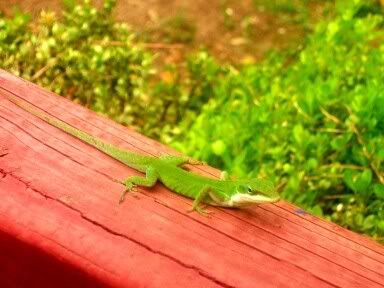
One of the Green Anoles that inhabit our deck area, we watched this one for awhile- including watching it excrete. What a funny moment, the kids said "ewwww!"


Our new Zebra Finch, which needs a friend- do not trust pet store employees. Not only does "Birdy" need a friend, we need a longer cage. We're about to study birds.


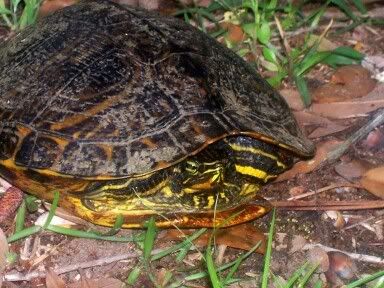
A turtle we found in the middle of the road and brought home. We observed him and didn't contain him.


I tried to take pictures of the nests we've been watching but they will not turn out.


Easter Pictures


Thursday, April 3, 2008

Who's in Charge Here?

I have struggled lately with all that is going on in our life. I've wanted to complete our lessons and be strong for the 9 weeks before next week's planned week off. Between dh's surgery, my brainstorms about history and science-I'm giving myself a break.

I moved our learning room around yesterday and removed our computer from the room. I've pulled a bookcase from Camille's room and added it to the learning room, actually I've added two bookcases with plans to add one more. The space is more open and with the computer out, it is more of a concentrated space - less distractions.

I want a computer desk for my birthday and since I have the Brother DCP7020, it is hard to find something that will allow the printer to be near the computer without having a huge cumbersome piece of furniture. I found this...

And I think it would be perfect for storing the printer in the square area on the right, a file cabinet drawer (yay!), paper and sheet protector storage, and a cabinet away from little ones hands! I love the computer being on the left. What I don't love is that it is made of manufactured wood. Sigh. But manufactured wood is all I can afford too. I just hope this would stay together after moving. Hopefully Office Depot will have a floor model so I can really check it out.

In the next week, I hope to finish organizing our science books (including putting them on shelves), plan out the next 9 weeks with notebooking in history (TOG), figure out our next science adventure including experiments and just really get some thinking and follow-through done. I do plan to continue to inventory our books, making lists for each subject in spreadsheets so that I can add and subtract. I'm also using the spreadsheets to keep track of which books which child has read.

|Title of Book|.........................|Author|.......................|Danny|Camille|

I don't know how to make a table in Blogger, so there you go. I'm making a spreadsheet of our books by subject and listing them with an area to check off for Danny and Camille. Science is almost done, I also want to create a TOG Year 1, TOG Year 2, TOG Year 3 and TOG Year 4 lists. I'm also going to make inventories of books we have for math, grammar, poetry, music, art, french and faith. I'm purging big time. I'll find out if we need it and if we don't. I thought LibraryThing would be my saving grace in organizing the books but I'm finding that I'd rather have physical checklist and a spreadsheet to update. I will update my LibraryThing account after I finish with my own lists.

It's organizing time!


Wednesday, April 2, 2008

Wednesday in April

I cannot believe it is April already! Wow. My birthday is later this month and time just keeps escaping me. I think once you hit 25, the years fly by.

We may not be moving. I'm very disappointed about this development but I'm sure God has a reason for it in some way. There are positives for not moving:

- Dh can focus on further development of the ministries in our current churches
- We can enjoy our large yard for nature studies a little longer, here we have 3 acres
- We can explore our farming community more with a renewed sense of nature study
- Next year dh would (hopefully) be more physically fit to help with the moving process
- Friendships that have developed have more time
- I have time to truly develop good habits in myself and my children whereas the busy-ness of moving would have prevented that
- Strengthening of character
Yep. If we're going to be here for another year I am going to consider a homeschool group in our surrounding areas, at least something to participate in once a month. In the fall Danny will be starting preschool, Camille will be in 3rd grade and I have an opportunity to marinate in how we may go about accomplishing everything so that by the time we do move, it won't be moving plus figuring out a new approach for learning. Hopefully we'll have a solid routine that we can cling to when we do move instead of where I'm at now. Right now I'm still reading Charlotte Mason's books and figuring out what I want to apply to our learning experience. It takes time to read, pray and discern what would be best for our kids and then figure out how to implement.

I'm still figuring out how to approach history, how much work is busywork and what is worthwhile. I have activity books for U.S. history which starts in just a few weeks so next week while we are off, I hope to put something cohesive together for Camille that we can just open and do. This will be time consuming but I think worthwhile in the end, I have a ton of ideas that are wonderful in their own right but bringing them to fruition is another thing. I don't want to waste time dreaming and scheming of grand ideas that won't get done in the end. Being realistic with idealistic view is very hard, lol.

I'm not concerned about curriculum anymore, I am good in that area- it's the implementation where I'm getting stuck because lately we have been very relaxed and my idealistic visions are more rigorous (on my part as well as the kids') than our current reality. I have a few things I need to learn and study and now instead of being busy with establishing a new residence and churches, I can take the time to dive in, such as Teaching The Classics, french and Tapestry of Grace.

In a way, I'm grateful we're not moving. I just need to keep reminding myself of that until I truly embrace it.


Tuesday, April 1, 2008

Spring Cleaning?

I know I usually post quite regularly, we just have a lot of things going on. Some small, some larger- having a dh who is recuperating from surgery, trying to create a solid foundation of organization with a soon to be 4 year old boy and soon to be 8 year old girl, taking care of daily responsibilities, etc. takes a lot of energy. We are cruising along with our lessons, each day doing our best and I'm working in a couple of directions to help create the foundational structure I wish I would have established from the beginning.

Just a few of the many things happening at our house:
1. Accounting of all our books and what they are to be used for, keep track of what has been read by which child (spreadsheet). Purge books that are not useful or redundant.
2. Eliminate excess and outgrown items in the kids' rooms (and mine).
3. Start preliminary packing for moving- Clean Sweep style (keep, sell/donate, toss).

Life is busy and if I stop to talk about it all, I'll set myself up to be discouraged. Try listing all your responsibilities and not feel overwhelmed! Lol.

What is it about Spring that makes you want to turn your house upside down? New Year's should be in Spring.


Sunday, March 30, 2008

Organizing Science (Books)

I have all of our science books in groups on our unused formal dining room table and I've been racking my brain on how to effectively organize them. I was lost on how to organize our books about animals until someone (thank you Dawn, you've been very inspirational!) pointed out that they could be organized by taxonomy. Taxonomy is the process of classifying living things by Kingdom, Phylum, Class, Order, Family, Genus, Species (it goes further and into sub-categories).

Looking at our books, we have books based on ecology or ecosystems (habitats) which focus more on an individual habitat and discuss the various animals which inhabit it. Then we have a few (just a few) books on individual or similar animals and animal behavior.

I need organization, it is something I crave and once I have it, I can move more freely through our studies with a focus instead of feeling all over the place. Because there is a HIGH probability that we're moving, I feel like I should organize our books before packing them and science is the one area where I'm lacking a meaningful system. I've had them divided by Life Science, Earth Science, Physical and Chemistry but that's not enough. I still wasn't able to determine how many books we had in each field of science and which ones I wanted to use for any given topic without spending a good amount of time looking through the bookshelves.

My overall divisions for our science books are as follows:


GENERAL SCIENCE
- Books that consist of more than one field of study (Biology, Geology, Astronomy, etc.)
- Reference books such as Encyclopedias that cover more than one field of study.

ASTRONOMY

: the study of objects and matter outside the earth's atmosphere and of their physical and chemical properties

The scientific study of celestial objects (such as stars, planets, comets, and galaxies) and phenomena that originate outside the Earth's atmosphere (such as the cosmic background radiation). It is concerned with the evolution, physics, chemistry, meteorology, and motion of celestial objects, as well as the formation and development of the universe
- Books about Space, Space Travel and celestial objects.


METEOROLOGY

Scientific study of atmospheric phenomena, particularly of the troposphere and lower stratosphere
Meteorology entails the systematic study of weather and its causes, and provides the basis for weather forecasting. See also climatology.

Concepts: Weather, Atmospheric Changes, Seasons & Calendar, Clouds, Water Cycle, Air Pressure, etc.


GEOLOGY
: a science that deals with the history of the earth and its life especially as recorded in rocks
: a study of the solid matter of a celestial body (as the moon)

Basic Concepts: rocks, soil, and gemstones, geology studies the composition, structure, physical properties, history, and the processes that shape Earth's components
- Books that deal solely with the physical properties of Earth


PALEONTOLOGY

the study of prehistoric life forms on Earth through the examination of plant and animal fossils. This includes the study of body fossils, tracks (ichnites), burrows, cast-off parts, fossilised faeces (coprolites), palynomorphs and chemical residues. Studies of prehistoric hominins, their culture and their behaviour are the purview of two other disciplines, archaeology and paleoanthropology.

Basic Concepts: Prehistoric life, dinosaurs, fossils

- Books about Dinosaurs, Fossils, Prehistoric


OCEANOGRAPHY
Study of the Earth's oceans and seas. Covering a wide range of topics: marine organisms and ecosystem dynamics; ocean currents, waves, and geophysical fluid dynamics; plate tectonics and the geology of the sea floor; and fluxes of various chemical substances and physical properties within the ocean and across its boundaries.

Concepts:
• Biological oceanography, or marine biology, is the study of the plants, animals and microbes (biota) of the oceans and their ecological interaction;

• Chemical oceanography, or marine chemistry, is the study of the chemistry of the ocean and its chemical interaction with the atmosphere;

• Geological oceanography, or marine geology, is the study of the geology of the ocean floor including plate tectonics;

• Physical oceanography, or marine physics, studies the ocean's physical attributes including temperature-salinity structure, mixing, waves, internal waves, tides and currents. Of particular interest is the behavior of sound (acoustical oceanography), light (optical oceanography) and radio waves in the ocean.
- Books that deal with any study of the oceans, seas and large bodies of water on the planet Earth.


CHEMISTRY
: a science that deals with the composition, structure, and properties of substances and with the transformations that they undergo
Basic Concepts: Atom, Element, Compound, Substance, Molecule, Mole, Ions and salts, Phase, Chemical bond, Chemical reaction, Energy, and Chemical laws
- Books that deal solely with the basic concepts listed above.


PHYSICS & OPTICS
1: a science that deals with matter and energy and their interactions
2 a: the physical processes and phenomena of a particular system b: the physical properties and composition of something
Basic Concepts: force, energy, mass, and charge
- Books that deal solely with the basic concepts listed above.


TECHNOLOGY
: the technology involving the development, maintenance, and use of computer systems, software, and networks for the processing and distribution of data
- Books that deal solely with the field of study defined above.


SCIENTISTS & INVENTORS
People in the past and present which make significant contributions to any of the fields of science.
- Biographies and Autobiographies in all fields of scientific study.
*books will also be listed under each field of science as well


HUMAN ANATOMY
Anatomy is subdivided into gross anatomy and microscopic anatomy.

Gross anatomy (also called topographical anatomy, regional anatomy, or anthropotomy) is the study of anatomical structures that can be seen by unaided vision.

Microscopic anatomy is the study of minute anatomical structures assisted with microscopes, which includes histology (the study of the organization of tissues), and cytology (the study of cells).

Anatomy, physiology (the study of function) and biochemistry (the study of the chemistry of living structures) are complementary basic medical sciences where are typically studied in tandem.
Basic Concepts: The human body consists of biological systems, that consist of organs, that consist of tissues, that consist of cells and connective tissue.
- Books that deal with the human body and biology in all aspects.


ECOLOGY
1: a branch of science concerned with the interrelationship of organisms and their environments
2: the totality or pattern of relations between organisms and their environment
Ecosystems: This classification is used to define the Global 200 list of ecoregions identified by the World Wildlife Fund (WWF) as priorities for conservation.

This classification gives the following terrestrial biomes :

However, for our purposes we will arrange the ecosystems this way for our studies K-4:
A. Grassland
1. Savanna
2. Prairie
3. Alpine (Mountain)

B. Desert
1. Coastal Desert
2. Semi-Arrid Desert
3. Hot & Dry Desert

C. Tropical Forest
1. Rain Forest
2. Sub-tropical areas

D. Forests & Woodlands

E. Aquatic
1. Freshwater
2. Ocean: Coral, Deep Sea
3. Wetlands, Rivers and Marsh
4. Arctic, Antarctic (Polar)

- Books that deal with habitats/ecosystems, environmental issues and endangered animals.


ZOOLOGY
1: a branch of biology concerned with the classification and the properties and vital phenomena of animals
2 a
: animal life (as of a region) : fauna b: the properties and vital phenomena exhibited by an animal, animal type, or group

A. Taxonomy:
orderly classification of plants and animals according to their presumed natural relationships
*This may change as I learn more but here's the structure I currently have and I do not claim this to be 100% accurate or finished.
VERTEBRATES

KINGDOM MAMMALIA - MAMMALS
-Monotremes - platypus
-Marsupial - kangaroos, koala
-Insectivores - moles, hedgehogs
-Chiroptera - bats
-Primates - monkeys, apes
-Endentata - anteaters, sloths, armadillos
-Rodents - rats, mice, muskrats, voles, hamsters, guinea pigs, chincillas
-Carnivora
A. Dogs (wolves, foxes)
B. Bears
C. Racoons
D. Weasels, Otters, Skunks, Badgers
E. Hyena
F. Cats (Tiger, Mountain Lion, Puma, Cheetah)
-Proboscidae - elephants
-Perissodactyla
A. Horses
B. Zebras
C. Donkeys
D. Tapis
E. Rhinoceroses
-Artiodactyla
A. Pigs
B. Hippopatumus
C. Camels
D. Deer
E. Giraffes
F. Cattle, Sheep, Goats
G. Antelopes
-Pinnipeds
A. Walrus, Seal, Whales, Dolphins, Manatees
Microorganisms, Fungi, etc.

FISH
AMPHIBIANS
REPTILES
BIRDS

- Books the singly deal with these topics or groups


INVERTEBRATES

PORIFERA- SPONGES
CNIDARIA -corals, jellyfish, hydra and sea anemones
ENCHINODERMS -Sea stars, sand dollars
WORMS
MOLLUSKS
ARTHROPODS
- Pillbugs, Centipedes, Scorpions
- Spiders
- Insects
A. General Insects
B. Butterflies & Moths
C. Bees & Wasps
D. Ants
E. Cockroaches, Grasshoppers, Crickets
F. Beetles
G. Flies, Termites, Dragonflies

- Books the singly deal with these topics or groups
B. Traits and Behaviors: biological clock, dominance, estivation, growth, hibernation, instinct, metamorphosis, migration, mimicry, pheromone, camouflage, reproduction, sleep, sound, and territorial behavior
- Books the singly deal with these topics


BOTANY
1: a branch of biology dealing with plant life
2 a: plant life b: the properties and life phenomena exhibited by a plant, plant type, or plant group

Botany covers a wide range of scientific disciplines that study plants, algae, and fungi including: structure, growth, reproduction, metabolism, development, diseases, and chemical properties and evolutionary relationships between the different groups. The study of plants and botany began with tribal lore, used to identify edible, medicinal and poisonous plants, making botany one of the oldest sciences.

I. Botanic Taxonomy

A. NONVASCULAR

Lack xylem and phloem tissues that carry water and food from one part of the plant body to another

1. BRYOPHYTA
Liverworts, hornworts, mosses
A. Hepaticae: Liverworts
B. Anthocerotae: Hornworts
C. Musci: Moses


B. VASCULAR
A. Psilophyta: whisk ferns or fork ferns
B. Lycophyta: Club mosses, quillworts, selaginellas
C. Sphenophyta: horsetails
D. Pterophyta: ferns
E. Coniferophyta: conifers, evergreen trees or shrubs
F. Cycadophyta: Cycads, fernlike leave and large seed cones
G. Ginkgophyta: Ginkgoes
H. Gnetophyta: found in deserts and tropical forest, seeds not in cones, leaves called bracts
I. Anthophyta: Flowering plants, angiosperms (two types of angiosperms: Monocotyledonae and Dicotyledonae
1. Monocotyledonae: One cotyledon
2. Dicotyledonae: Two cotyledons
II. Parts of plants: bark, bud, bulb, catkin, cell, cellulose, chlorophyll, chloroplast, corm, cotyledon, drupe, flower, fruit, grain, inflorescence, leaf, lenticel, nut, raceme, rhizome, root, sap, seed, spore, stem, thorn, tuber, wood

III. Kinds of Plants: angiosperm, annual, biennial, bryophyte, carnivorous plant, conifer, dicotyledon, epiphyte, fern, flower, grass, gymnosperm, herb, hornwort, legume, liverwort, monocotyledon, moss, perennial, poisonous plant, pteridophyte, shrub, succulent, tree, vegetable, vine, water plant, weed

IV. Plant Products: Alcohol, Charcoal, Cork, Drug(s), Dye, Fiber, Food, Forest Products, Gutta-percha, Lumber, Paper, Perfume, Resin, Rosin, Rubber, Tar and Turpentine

V. Plant Growing: Agriculture, Alternation of generations, Auxin, Bonsai, Breeding, Farm & Farming, Fertilizer, Gardening, Germination, Grafting, Greenhouse, Herbarium, Hybrid, Hydroponic, Insecticide, Nursery, Photoperiodism, Photosynthesis, Pollen, Pruning, Reproduction, Soil, Terrarium, Transplanting

VI. Where Plants Live: Bog, Desert, Forest, Grassland, Pampa, Plain, Pond, Prairie, Savanna, Seashore, Steppe, Tropical Rain Forest, Tundra, Wetland

VII. Crops
VIII. Garden Flowers
IX. Wild Flowers
X. Herbs
XI. Vegetables
XII. Shrubs
XIII. Trees

For book purposes we will have all books about flowers, plants and agriculture under Botany.
I will be expanding this as we learn more about Botanic Taxonomy.


Special note: Creation vs. Evolution and all that jazz will be studied separately under Apologetics.


Friday, March 28, 2008

Weekly Report, TOG Week 18

Dh had surgery Monday. We're not having a full week but doing what we can between my nurse duties. My energy level varies throughout the day because I'm bouncing between the kids, Jack and dh needing me. It's draining when Danny is getting into something, dh is calling me and Camille is asking questions. Poor Jack hasn't had a walk in a week and is restless too.

The kids don't really understand that dh cannot be left alone and this makes us homebound for a while, with the exception of quick trips to the library, post office and grocery store. We can't even go on a nature walk although we will be spending time in the backyard today.

NATURE STUDY while confined...
We're going to observe two nests in our tree, the actual tree that is the header for this blog. The rest of the nests that we thought were being built were either blown away by strong winds we've had or they weren't actually nests in the making at all. If the weather is nice today, I'm planning a backyard picnic for lunch with a drawing session in our nature journals afterwards. Thankfully we have a phone system that allows each handset to call each other like walkie-talkies so that as long as we don't venture too far in the yard, dh can call me if he needs me.

We have a Hummingbird Feeder at our kitchen window now and a little friend that has been coming by every now and then. Our garden of dahlias, marigolds and impatiens is germinating and we have a bird feeder for our backyard birds. I suspect we have a nest of Cardinals in our tree because a male Cardinal serenades us throughout the day.

Our lesson status from this week

Bible- one lesson all week

Math- out of lessons 110-114, lesson 110-112 is done- we'll complete 113 and 114 today and tomorrow

Reading- Camille is still reading George's Marvelous Medicine and I'm still reading aloud Mother West Wind's Children

Poetry- Reviewing daily Time to Rise and Singing Time

History- none

Science- working on notebook pages for Venus and Earth, nature study

LA- so far 2 lessons of PLL have been done, another 2 will be done today and tomorrow

Phonics- Lesson 3 of Book 6 was finished yesterday in one sitting (she's getting fast!). Side note: Camille has been writing numerous letters this week on her own accord and experimenting with spelling larger words on her own. She likes to wrap these notes/letters up like presents and present them to me.

French- listening to Unit 1 of Écoutez, Parlez book 1 although we should be on Unit 2. Review never hurts, lol.

Piano- private lessons going well, we've been listening to Vivaldi each day


Next week will be our official week for TOG Week 18, we will just pick up where we left off and I will not worry about getting off the schedule. We will still take April 7-11 off for Spring Break.

Books and Science
I am working on separating our science related books into the topics to cover and putting the books in their own totes sort of like a unit study. We are building a science library through Bookcloseouts.com and BookMooch.com with occasional Amazon orders.

Here's a recent order I made at Book Closeouts:

Ocean Life from A to Z (Book and DVD)
Maps & Globes by Jack Knowlton
The Circle of Days
The Animal Family
Everglades (by Jean Craighead George), I purchased the last one but there are other books linked
Rachel Carson's The Sense of Wonder
The Story of Clocks and Calendars by Maestro
Gather Up, Gather In: A book of Seasons
One Lighthouse, One Moon by Anita Lobel
And the Good Brown Earth
Buzz Aldrin's Reaching for the Moon

I saved over $100.00 at BookCloseouts.com

There are loads of living books available at BookCloseouts, grab your list of favorite authors and see for yourself. There are a number of Jim Arnosky, Jean Craighead George and other wonderful living author's books available.


SEARCH for your Favorite Authors

Author:


You know how some women get excited about finding new shoes or clothes for discount prices? I'm the same, just with fabulous books. Lol. Here are the recent books we've gotten from Bookmooch.com


Thursday, March 27, 2008

Oceanography K-6

From recent research on oceanography books, our list of living books and reference books


Wednesday, March 26, 2008

Wordy Wednesday

My dh is healing, he's sore and needs help but he's doing well. We are now doing our lessons since FIL has left and I'm grateful to give the kids something productive to do. It drives me crazy not to do something with them. I didn't realize how much purpose it gives our day, Camille is currently listening to Vivaldi and completing her independent math work.

Science
I am working on book lists, books we own, books we want to own and what age group they are appropriate for. I'm using the topics I put in our Seasonal Science chart to organize the books although we're not going to our nature studies. For an example:

Weather

The Listening Walk
Feel the Wind
On the Same Day in March
Air is All Around You
Usborne First Encyclopedia of Our World
The Cloud Book
Magic School Bus, Inside a Hurricane
The Man Who Named the Clouds
The Storm Book
and so on.


I'm actually not putting them in grade levels but I'm writing down all our titles and I'll put whatever succession of reading I think will be best for my kids. BookMooch is aiding greatly in developing a home library for science. We have a short list of books to purchase after previewing them through the library to make sure we really want them.

THE IDEA
We will work out for ourselves the balance between reading, narrating, illustrating and performing experiments. We'll read about a subject for 60-90 days and then move on. We will be keeping a science notebook, filled with whatever we want at whatever time. It could be coloring pages, illustrations from our reading, narrations, or a map about where we are talking about. I thought about creating unit studies for each book, and making it more academic until I realized that will kill the love of learning. I will follow the kids' lead on this.

Nature Studies
This will consist of backyard projects and nature walks but will be done informally. I'm reading a lot about being a silent teacher during nature walks so I will keep mum and just follow my own interests. If I see a flower I want to draw, I'll draw it. I'm so glad I bought the Handbook of Nature Study, what a multi-layer resource!

Although I can't really put the plan on paper just yet, we're going to read Mother West Wind's How Stories after we finish Mother West Wind's Children by Thornton Burgess. From there, we'll probably read Seed-Babies by Margaret Worley which I printed from online.

That's it. I'm done thinking, planning and scheming for science, it's time to DO. Actually we're still on the planets but we are reading Mother West Wind's Children and doing nature studies. I haven't written about our nature walks because LIFE has been busy. We're doing them, I'm just not writing about them. Hopefully that will change this week.

Boy this is turning into a science blog...sheesh. I'll post about our 3rd grade poems next. Yes, I know which ones they will be.


Tuesday, March 25, 2008

It's Tuesday, or is it Monday?

My dh had back surgery yesterday, he is fine and will be coming home today from the hospital. My FIL is here. So do we have lessons or let them go? In trying to make sure we're prepared for dh's surgery, I didn't have time to prepare like I would usually do for a week of lessons. I think it's going to be a super light week with reading, writing, math and science.

I think I'll take some time this week to think more about science. I'm a structured person but I don't feel like I've found my balance quite yet. I still lean towards more structured studies- a part of me just wants to read, learn and have fun while the other part wants notebooking pages, a plan to follow and reassurance that I'm providing the meat of the academics. It's more of a personality thing for me than anything else which is preventing me from being able to solidify any plans.
 

Sunday, March 23, 2008

Science by Seasons


Each season, we'll have a MAIN focus but read/journal about all the topics in the season through our book basket reading (independently) and through our nature walks. I did go through and bold certain topics to highlight but realized that it might be better to just see where our interest leads a little. This may change COMPLETELY at ANY TIME but I feel better having some type of plan.

Anyways, it's just an idea. Next, I'll make a listing of the books we'll read that I know of right now, leaving it open to explore other books that we haven't discovered yet.


Friday, March 21, 2008

Continuing ideas about science

I'm still trying to wrap my head around all my ideas and find a way to make them work for us instead of us working for them. Here's what a few lovely friends and I worked on today while visiting.


1. Use the literary science books as primary reading, with The Handbook of Nature Study and other books for more information. Provide on-level or below book basket for pleasure reading of any science topics throughout the year.

2. Admitted to myself and friend (fellow homeschooler) that I am in fact, a nature girl.

3. I was reminded very loving that if I follow my heart and trust the gifts God has provided me, I will provide an excellent education in science for my children. Thank you so much for reminding me of that Theresa!


Here's the Nature Study by Seasons outline we came up with:

Fall
Forest, Agriculture, Geology, Human Body, Camping Outdoors, Ecology

Winter
Astronomy, Chemistry*, Physical Science*, Technology*, Weather, Ecology
*Experiments can be done inside during winter or any other time during the year when we want/need to stay inside.

Spring
Botany, Ornithology (birds), Agriculture, Weather, Astronomy, Earth Science, Ecology

Summer
Weather (hurricane season), Marine Biology/Water habitats, Insects, Reptiles, Physical Science through play, Ecology


Yearly Projects:
- gardening, composting
- adopting a plant, tree, animal and observing & documenting growth/change throughout a year
- raising animals (tadpoles, worms, etc.)
- keep collections (rocks, shells, flower pressing, etc.)
- recycling
- when old enough, participate in 4-H and other programs

Scientist Biographies
- do within history timeline, with age-appropriate books
- finish each biography with an experiment if possible

(Advice to me) Remind yourself:
You are doing great, it will be fine.

I'm still in thought about this, this is really just a free-flowing write of my thoughts. I'm trying to figure out if I should structure this anymore for myself or just go from here.

Books I'm depending on to help me:

The Educated Child by William Bennett provides a timeline of studies for each grade through 8th and is supported by Core Knowledge which includes books like Books to Build On by E.D. Hirsch and What your child needs to know series. I'm not looking to duplicate the Core Knowledge approach of studies but use it as a tool to help formulate our own. Core Knowledge has free online lesson plans. The Handbook of Nature Study by Anna Comstock, All Through the Ages by Christine Miller, Home Learning Year by Year by Rebecca Rupp, The Nature Study Idea Book for All Ages by Mary Woodis. The rest is me and my crazy ideas.


Thursday, March 20, 2008

Ideas for 3rd Grade

again from my notes...

The year will be split up into 4 quarters, as there are 4 units in each year of TOG. Each quarter will be about 9 weeks with 1 week off. A proposed schedule

Sept 15th - Nov 10th = First Quarter
.............Nov 17-28th off, two weeks
Dec 1-19th, Second Quarter continues..
.............Dec 22-26th off
Dec 29- Feb 6th = Second Quarter
.............Feb 9-13 off
Feb 16- April 17th = Third Quarter
.............April 20-24 off
April 27-June 26 = Fourth Quarter

This will allow us to start AFTER the projected release dates of TOG Redesign Year 3 and Year 4 for 4th grade.

Each Quarter:

Read about and listen to- one composer in the Baroque Period 1600-1750.
1st- Antonio Vivaldi
2nd- Johann Sebastian Bach
3rd- George Frideric Handel
4th - Franz Joseph Haydn (Classical Period 1750-1820)

Focusing on one composer at a time will allow us to rent DVDs, get familiar with their pieces and learn more deeply about each composer. We will read biographies by Opal Wheeler and Madeleine Goss as well as any picture books the library can provide. We will also learn the themes from Themes to Remember 1 by Classical Magic. Camille will work on creating a presentation on each composer.

Scientist Biographies - at least two each quarter
These will be in the framework of our history studies. I have not seen the book list for TOG Year 3 so this will be decided upon later. There will be an extension project, for at least one scientist, utilizing art and writing if not experiments. I think 1 per 3 weeks is more than enough to read and accomplish a project. *I may simplify this to just reading aloud and narrating if it is too much. This will be a Masterly Inactivity exercise.

Art will be through projects and formally using Drawing With Children by Mona Brooks.
She wants art, she'll have art- coming out of her ears! Lol. Nature Journal, Art Lessons, History and Science projects.

I may add more to this later


My evolving list of books for Science

From my recent notes...

Books we have and want to read no matter what we do, the ones with * are ones we do not own. This list has nothing to with Tapestry of Grace, which includes science history within it's framework. This has been completely done on my own with the exception of the list of scientist's name in chronological order which came from a timeline. It is not complete but a great start.

Animal books
Among the Pond People
Among the Night People
Among the Forest People
Among the Meadow People
Mother West Wind Books: Children, How
Burgess Book of Nature Lore
Burgess Animal Book for Children
Our Humble Helpers (Domestic)
How Animals Talk
Stories Mother Nature Told Her Children*

Birds
Burgess Bird Book for Children
Citizen Bird by Osgood
Wings of the Forest by Long

Insects
Cheerful Cricket and Others by Jeannette Marks
Insect Folk by Morley
Children of Summer: Jean Henri Fabre Insects
more Fabre books like Life of the Spider, etc.

Botany
Springtime Flowers
Flower Chronicles
Wonder Book of Plant Life by Fabre
Seed-Babies by Morley
Naturalist's Garden

Oceans & Sea Life
Burgess Seashore Book*
The Seashore Book by Zolotow
The Seaside Naturalist

Earth Science
The Geography Book by Caroline Arnold
The Space Book
A Child's Introduction to the Night Sky
Rey's Stars
Rey's Constellations
Look at the Sky and Tell the Weather
Fairy-land of Science
Story Book of Science
Madam How and Lady Why

Geography
Galloping the Globe
Geography Songs by Audio Memory
Home Geography by C.C. Long
A Child's World of Geography by Hillyer
Seven Sisters by Jane Andrews
Holling C. Holling books (do not have all)
The Fifty States by Meirs

Naturalists' books*
John Audubon
John Muir
Jane Goodall (The Shadow of Man, we have)
Beatrix Potter

Scientist biographies*
Great Inventors and their Inventions by Bachman

Below will come from library, only to be purchased if we cannot get from library
differing reading levels, incomplete titles b/c this is how it is from my notes.

Chronologically so far:

Ancient Science by Jim Wiese
Pythagoras- What's Your Angle?
Hippocrates - Father of Medicine by Goldberg
Socrates- Wise Guy
Plato- Plato Stories for Children, Plato's Journey (Fic)
Aristotle- Aristotle's Firefly (Fic)
Archimedes- Door of Science, Mr. Archimedes' Bath (juv fic)
Ptolemy - n/a
Galen- My life in Imperial Rome, Gateway to Medicine
al-Razi - n/a
Alhazen - Ibn Al-haytham First Scientist by Steffens
Robert Grosseteste- n/a
Thomas Aquinas- St. Thomas Aquinas & the Preaching Beggars
Roger Bacon- Magic Gold by Lansing
Leonardo Da Vinci - plenty to choose from, Leonardo's Horse
Paracelsus- Monarch of Medicine by Susac
Copernicus- The Earth is a Planet/ check out Todd Goble
Andrea Vesalius- n/a
Konrad von Gesner- n/a
Tycho Brahe- Mapping the Heavens, Boerst
René Descartes- He Freed the Minds of Men by Hoyt, The Fly on the Ceiling (Ear.Reader)
Galileo Galilei- Starry Messenger, plenty to choose from
William Harvey - WH and the Mechanics of the Heart
Francis Bacon- n/a
Isaac Newton- Discovering Nature's Laws by Salas
Robert Boyle- Skeptical Chemist
Robert Hooke- author Mary Gow
Edmond Halley- The Man and His Comet/ Mr. Haley and His Comet
John Ray- n/a
Francis Hauksbee- n/a
Stephen Gray - n/a
Leiden jar - n/a
Georges de Buffon - n/a
Benjamin Franklin- plenty to choose from
Carl Linnaeus- Father of Classification
Joseph Black- n/a
Joseph Priestley - and the Discovery of Oxygen by Conley
Abraham Werner- n/a
Antoine Lavoisier- Chemist who Lost his Head
Caroline Herschel- still looking
Luigi Galvani- Giants of Electricity
James Hutton - n/a
Edward Jenner- Dr. Jenner and the SPeckled Monster by Marrin
Alessandro Volta- and the Electric Battery by Dibner
John Dalton- and the Atomic Theory by Whiting (look for another)
Jean De Lamarck - n/a
Hans Oersted- n/a
Justus von Liebig- the Chemical Gatekeeper by Brock
Johannes Kepler- Giants of Faith & Science by John Tiner
Charles Lyell- Lyell's Travels in N. Ameria
Charles Darwin- The Tree of Life, The Voyage of the Beetle (pb)
Michael Faraday- Father of Electronics by Lugwig
Ada Lovelace- Who Was Ada Lovelace? by Lethbridge
Joseph Lister- Giants of Science by P. Parks
Gregor Mendel- The Friar Who Grew Peas, Genetics Pioneer
Dmitri Mendeleev- ?
James Maxwell- The Man Who Changed Everything
Robert Koch- and the study of Anthrax/ Father of Bacteriology
Louis Pasteur- Germ Hunter, plenty to choose from
Heinrich Hertz- A Short Life by Susskind
Sophia Krukovsky- n/a
Wilhelm Rontgen- The Mysterious Rays of Dr. Rontgen, Discoverer of Xray
Antoine Becquerel- and the Discovery of Radioactivity
Max Planck - n/a
Albert Einstein- plenty to choose from
Thomas Morgan- n/a
Marie Curie- Something Out of Nothing, plenty to choose from
Ernest Rutherford- Father of Nuclear Science/ ER and the Explosion of Atom
Niels Bohr- Gentle Genius of Denmark, Physicist and Humanitarian
Alfred Wegener- Uncovering Plate Tectonics/ Ending In Ice
Edwin Hubble- EH and the Big Bang
Georges LeMaitre- n/a
Alexander Fleming- by R. Hantula, The Man who discovered Penicillin
Hermann Bondi- Science, Churchill and Me (Autobio)
Francis Crick- Unlocking the secrets of DNA
Robert Wilson- n/a

others
Nikola Tesla- My Inventions (Autobio)
Martha Maxwell- Natural History Pioneer by McVey
Garrett Morgan by Jackson
The Scientists: A History of Science Told Through the Lives of Its Greatest Inventors by John Gribbin and Adam Hook


check out Immortals of Science, Great Minds of Science, Giants of Science

At Baldwin Project, "Story Lives of Great Scientists"- free online.


Wednesday, March 19, 2008

Science is Vexing Me

I have all these fabulous ingredients and I cannot seem to come up with a recipe that smells and tastes good.

Here's what I'm tackling with, I want

-Nature Study: formal and informal
I want my children to develop keen observation skills and patience as well as a curiosity.

- Scientist Biographies: on-level and as read alouds
I want to start reading biographies of scientists within our history time period. Tapestry of Grace provides this for me to a certain extent, but I've decided I want to illuminate the fascinating lives of the scientists, inventors, and visionaries more often. The quantity of persons to cover within a time period will dictate how often. This was sparked by reading "To Space and Back" by Sally Ride aloud. It drew us in and we all loved it.

-Literary Science
I want to read, I want my children to read...there are so many wonderful books out there, old and new! Camille and I read Into the Woods: John James Audubon Lives His Dream by Robert Burleigh and we loved it. Camille was drawn in completely, she identified with Audubon when he made note of how the forests where being destroyed so that people could make houses. Camille asked, "Why do they destroy the animals' homes?" I started to answer her, "People need homes too," but I realized how trite that sounded so I told her that as people grew more advanced, they wanted more things and the old things weren't as good anymore. We could live in a house with no electricity but would you want to? She said no but then she asked me if by having electricity we were hurting animals. "I'll have to look into that."

-Solid science academics with experiments
I have looked at curriculums for grades 5 and above because I need a plan for K-8 and I haven't found any that I love. Exploring God's Creation is close because it involves some of the natural science we want to cover but it also has a major slant. I have a few copies of Prentice Hall Science Explorer and now they seem so dull and wanting for enthusiasm. If I had never seen the literary science books, I would have been perfectly happy with Prentice Hall.

I have read about science studies in The Well-Trained Mind, Teaching the Trivium, The Educated Child/Core Knowledge, Ambleside/Mater Amabilis, and Designing Your Own Classical Curriculum (Berquist). I have my state's standards for education also.

My other problem is that if I could figure out the ingredients, I don't know what order they should go in!
Here's the myriad of choices before me:

Option 1
Let literary science lead; use books we want but by appropriate age level.
Fill in with nature studies, self-led everyday and 1 formal outing a week.
Read scientists' biographies that correspond to our history time period, this may not always match what we're learning in science though.

Option 2
Use a curriculum spine, preferably something narrative but if not available then something we'd at least enjoy.
Supplement with living books about topics in curriculum
Nature studies informally
Scientist biographies with history time period

Option 3
Let Nature Studies lead, read about topics with living books that we're observing, using The Handbook of Nature Study by Comstock.
Read scientist biographies within history time period, alternate with literary science read alouds

The problem is that ALL of these options would be great, well with the exception of the curriculum led option but that would depend on what we use for curriculum. I want the kids involved in 4-H and to participate in science fairs & competitions when they are older and I will be requiring them to write an essay when they reach that point in their studies.

Yep. I'm vexed.