




 Urgh. I hate it when others are right! There's no possible way I can focus on learning French fast and deep enough to teach my children to be bilingual. I know all the arguments of raising children with two languages, the positives and negatives but I'm waving my white flag. I surrender. No more French until after Latin studies.

Your result for What Your Taste in Art Says About You Test...

Islamic art is developed from many sources: Roman, Early Christian, and Byzantine styles were taken over in early Islamic architecture; the architecture and decorative art of pre-Islamic Persia was of paramount significance; Central Asian styles were brought in with various nomadic incursions; and Chinese influences . Islamic art uses many geometical floral or vegetable designs in a repetitive pattern known as arabesque. It is used to symbolize the transcendent, indivisible and infinite nature of Allah.
People that like Islamic art tend to be more traditional people that appreciate keeping patterns that they learned and experienced from their past. It is not to say that they are not innovative personalities, they just do not like to let go of their roots. They like to put new ideas into details and make certain that they will work before sharing them with others. Failure is not something they like to think about because they are more interested in being successful and appreciated for their intelligence. These people can also be or like elaborate things in their life as long as they are tasteful. They tend to prefer geometric patterns and vibrant colors.
Take What Your Taste in Art Says About You Test at HelloQuizzy


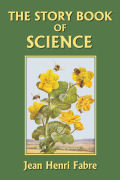 Fourth Grade: This year we will explore topics as they interest us as we read The Storybook of Science by Jean Henri Fabre. Topics range from ants to metals.
 Nature walks & studies will continue. The little details such as how we will keep a science notebook, whether we will profile the scientists we meet and learn about is still up in the air.


 Sitting on my shelf from a sale purchase I made last year was Animals Alive! An Ecological Guide to Animal Activities by Dennis Holley. Dennis Holley is a biology teacher for grades 4-12 and has won two prestigious awards for his alternative curriculum used in Animals Alive! On the back of the book the story of a court case where a judge ruled that a girl would not be obligated to dissect a frog is presented with the challenge of whether or not the same lessons can be taught without killing animals.
Observation: Observe and investigate the structure, movement, feeding, behavior/response and reproduction/growth of the specimenHolley says that "although some factual background is necessary, try to maximize thinking and minimize memorizing. Let process lead to content when possible. For example, allowing students to first work with live animal (process) and then discussing specific facts about the animal (content) will make the facts more understandable and relevant because students will have seen the animal live, up close, and in action."
a. Under behavior and response, students will explore geotaxis, thermotaxis, galvanotaxis, phototaxis, magnetotaxis, hydrotaxis, thigmotaxis, chemotaxis, rheotaxis
Ecology: investigating the habitat and surroundings of the animal and discover its place in nature.
Integration: Activities to integrate what the student has learned with writing, fine arts, social studies (history and geography), and societal/environmental issues. Math skills are also used when possible including constructing and analyzing data tables and graphes, measuring, calculating, and problem solving.
Chapter questions, activities and challenges are designed to be used in hands-on experiences in which students are actively involved in scientific investigation. When possible, they follow an inquiry-oriented approach designed to develop the following science process skills:
1.Observing
2. Measuring/Graphing: learn to make, record, and display quantitative information
3. Comparing/Contrasting: will learn to identify distinguishing characteristics among objects or events.
4. Sequencing: will learn to put events in order
5. Prediction: will learn how to propose possible outcomes
6. Experimentation: will learn how to design experiments to test their predictions
7. Analyzing/Reasoning: will learn how to explain the meaning and importance of data gathered or facts given.
8. Drawing Conclusions: will learn to make general statements about particulars.
9. Modeling: will learn to construct physical or mental models.
10. Communication: will develop skills for conveying information in oral, written, or pictorial form.
a. Class CalcareaV. Importance of Sponges
b. Class Sclerospongiae
c. Class Demonspongiae
d. Class Hexactinellia
a. Sponge Habitat
b. Sponge Habitat Comparisons
c. Land Sponges
d. Different Forms for Different Folks
e. Walk a Mile in My Shoes: Have students try to put themselves in the sponge's place by having them react orally or in written form to the following questions:
__1. Would you rather be a marine sponge or a freshwater sponge? Why? (Acceptable answer given.)
__2. Would you rather be a sponge with long spicules or one with short spicules? (Acceptable answer given.)
f. Muddy Water=No Sponges
g. Sponge Structure
h. Sponge Size Comparisons
i. Sponge- One or Many?
j. Green Sponges?
k. Sponge Regeneration
l. Sponges Come Together
a. Sponge Food
b. How Do Sponges Get Food?
c. Fabulous Filter
d. Is It Food Yet?
e. Attack of the Hungry Encrusters
a. Sponge Reproduction
b. Smoking Sponges
c. Gemmules- Why and Why Not
d. Observe Gemmules
a. Writing: report in which they explain which sample was the natural sponge and which was synthetic.IXX. Release of Specimen.
b. Fine Arts: Have students paint a picture of a sponge using a natural sponge, or, write a song or poem entitled "I'm Just a Lowly Sponge."
c. Social Studies:
__1. History: Why did it take so long to discover that sponges are animals? (Possible answers provided)
__2. Geography: Where are sponges harvested today? In the past?
d. Societal/Environmental Issues:
__1. Have students respond either orally or in written form to the question, How can studying reaggregation behavior of dissociated sponge cells be useful to humans? (Answer provided.)
__2. Why can sponges be thought of as biological apartment houses (or shopping malls)?
 Tapestry of Grace, Year 3 Week 5
 Life Science: We studied the respiratory system this week. We didn't have any additional reading but here's a project Camille did. It shows how the diaphragm expands to help us breathe since our lungs do not have any muscles.


